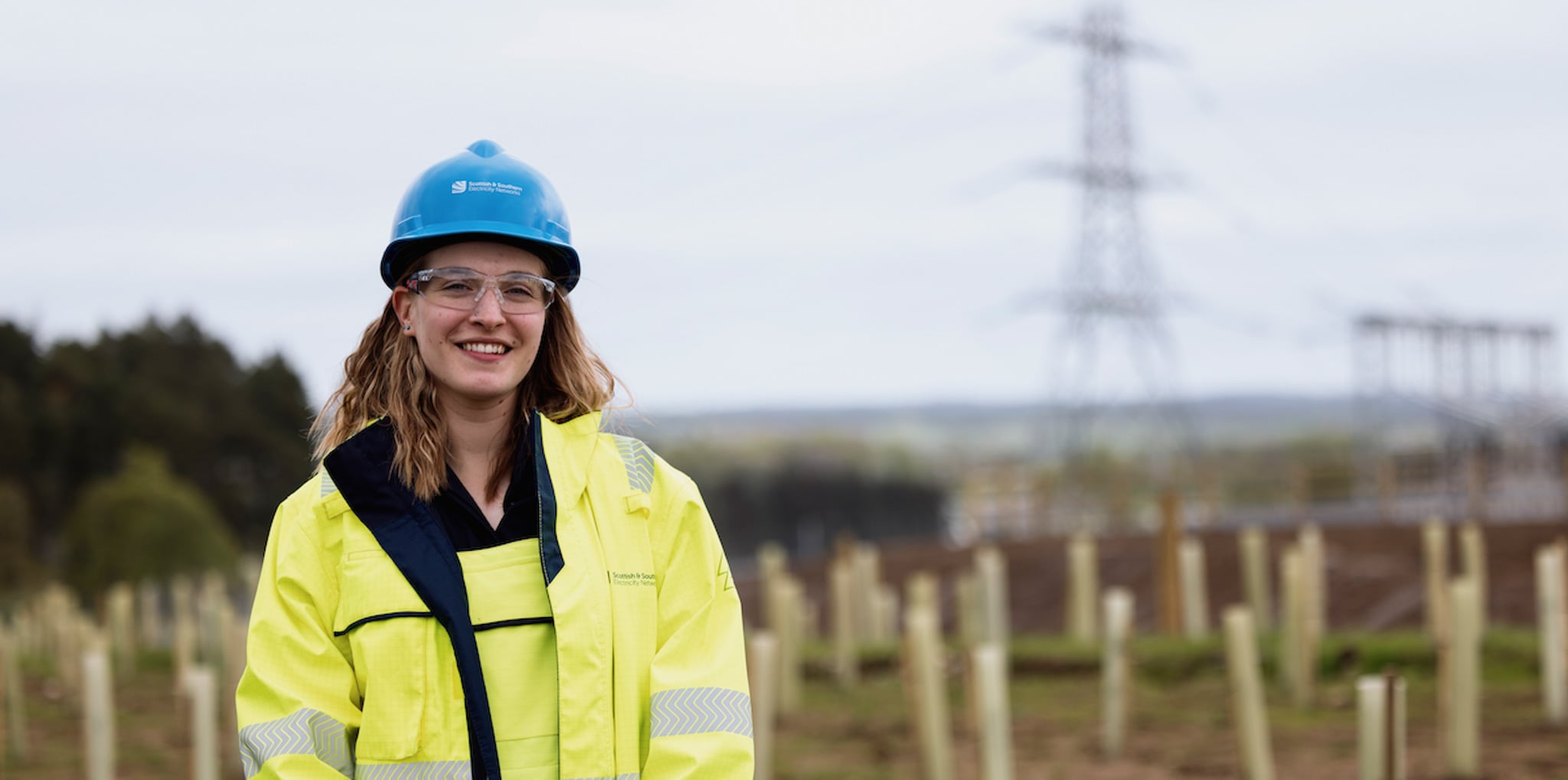
Alyth – Tealing – Westfield Overhead Line 400kV Upgrade
- Type:
- Reconductoring of Overhead Line
- Location:
- Angus, Fife, Perth & Kinross
- Rating:
- 400kV
Upgrading existing overhead power lines to accommodate home-grown renewable generation, working towards a secure and net zero energy future.
Overview
Status: Construction Phase
Stage 4 of 5
-
Stage 1: Project Assessment: (Completed)
During the Project Assessment stage, we’re committed to evaluating potential project strategies. At this stage, we provide information about the proposed project plans on our website for stakeholders to review and provide feedback on, as well as holding in-person events within the local community demonstrating our collaborative approach to the project's development.
-
Stage 2: Early Development: (Completed)
During Early Development, we concentrate on refining the project details, based on our initial assessment of key environmental, technical, and economic factors to identify the best performing approach. We would like to gain further input from communities through accessible in-person and in some cases online consultations, which are crucial in refining our plans and strategies before advancing to the application stage.
-
Stage 3: Project Refinement: (Completed)
The Project Refinement stage is where we finalise project plans and submit the required planning applications to the relevant planning authorities. Communities and other key stakeholders can provide feedback directly to the appropriate body such as their local council and constituent representatives.
-
Stage 4: Construction Phase: (In progress)
Within the construction phase we mobilise our workforce, contractors, and necessary equipment to begin construction. We maintain open channels of communication, allowing communities and stakeholders to submit feedback on the construction activities to our dedicated Community Liaison Managers, ensuring ongoing engagement to any thoughts or concerns while we carry out work in the area.
-
Stage 5: Operational Phase:
At this final stage, the project successfully moves into the operational phase, with the surrounding environment restored to its original state or better. Our Community Liaison Mangers continue to be available to address any questions or concerns, ensuring a lasting positive impact and strong community relations even after the construction activities conclude.
About the Project
In order to support the continued growth in onshore and offshore renewables across the north of Scotland, supporting the country's drive towards Net Zero, investment in network infrastructure is needed to connect this renewable power and transport it from source to areas of demand across the country.
To support the increased capacity from the proposed Kintore – Tealing 400kV Connection, the export routes to areas of demand must be upgraded to 400kV. This means the existing Alyth – Tealing and Tealing – Westfield overhead lines, which currently operate at 275kV, need to be upgraded to operate at 400kV.
This is part of the East Coast 400kV projects, a scheme consisting of several onshore reinforcement projects on the east coast of Scotland.
Find Out More About Kintore to Tealing 400kV Connection
This video outlines how the project contributes to our role in delivering Net Zero.
Pathway to 2030
The Pathway to 2030, published by National Energy System Operator NESO, the electricity system operator for Great Britain, sets the blueprint for the electricity transmission network infrastructure required to enable the forecasted growth in renewable electricity across Great Britain.
The projects identified within the Pathway to 2030 are critical to delivering the UK and Scottish Government’s offshore wind targets. To deliver these targets, we are investing over £10bn to upgrade the network infrastructure across the north of Scotland as the region plays a leading role in the clean energy transition.
As part of this investment, there is a requirement for the Alyth - Tealing - Westfield Overhead Line 400kV Upgrade.
Community Engagement
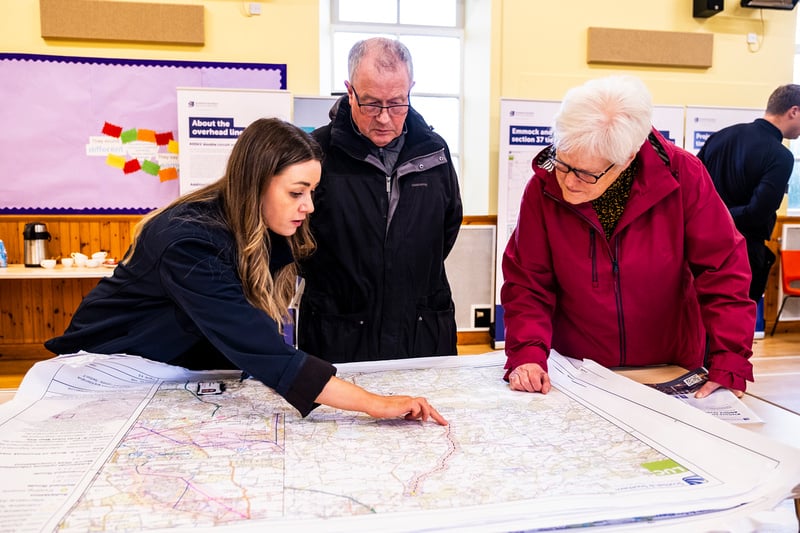
Throughout the life of our projects, we aim to work positively with local communities and keep people informed about what we are doing. This is particularly important when we are developing a proposal and we want to understand what local people think about our plans.
We endeavour to take the time to discuss proposals with local community councils, encourage engagement from the wider community and listen to the feedback we receive.
We will do our best to answer any questions and address issues or concerns that are raised with us.
When our project progresses into construction, we will continue working closely with the local community to ensure that our work has as little impact on the lives of those living and working in the area and as many long term positive effects as possible.
How we’re embracing artificial intelligence (AI)
We intend to use AI to assist our experienced teams in the analysis of your feedback, so we can categorise key points raised more quickly. You can learn more about how we’re utilising AI on this dedicated web page.
The East Coast 400kV Projects
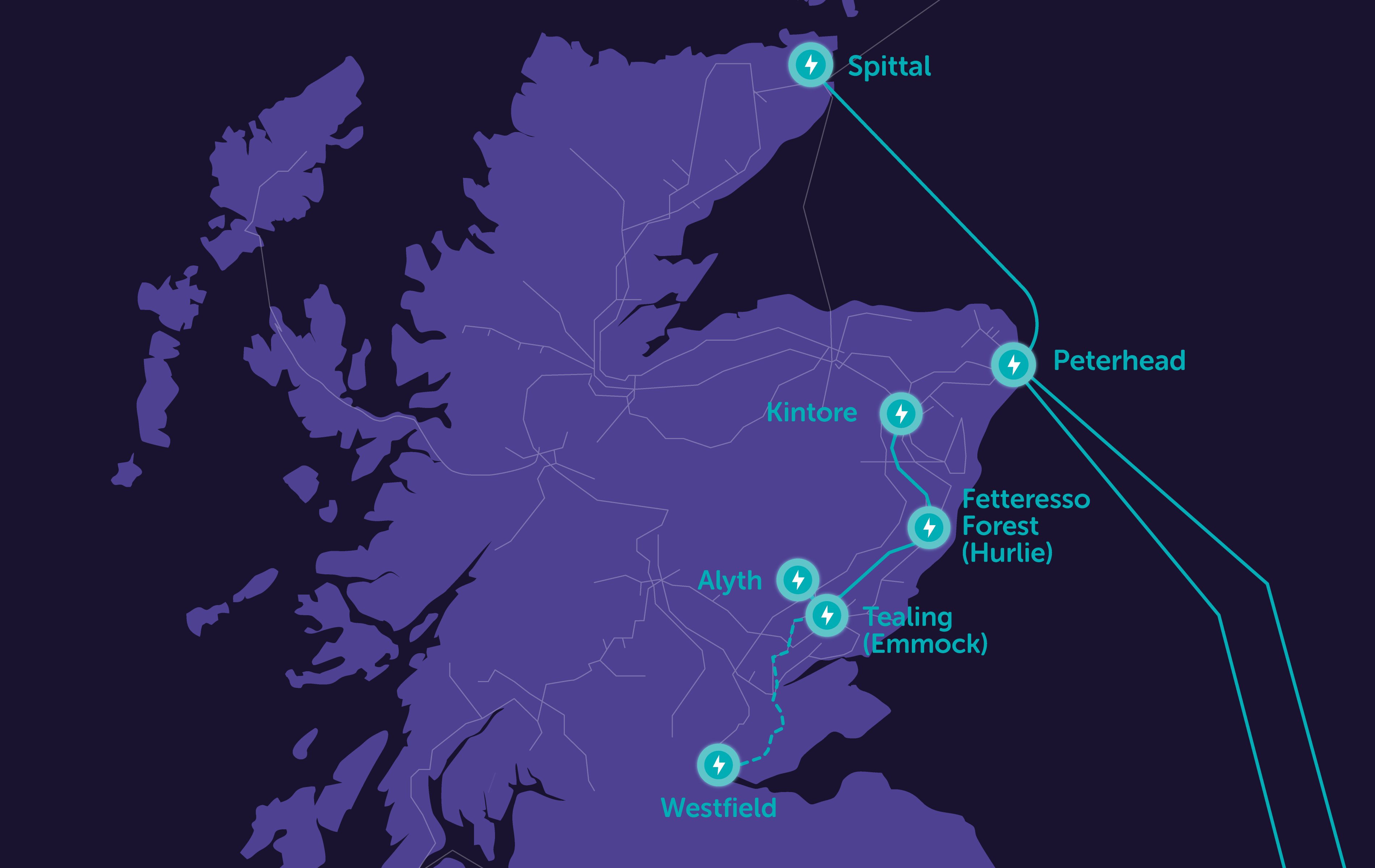
The East Coast 400kV projects are a scheme consisting of several onshore reinforcement projects on the east coast of Scotland, comprising new and upgrade of existing infrastructure. The majority of the infrastructure projects are within our operational area in the north of Scotland.
To provide the full 400kV capability that the scheme intends to deliver, there are several projects that contribute to the full scheme:
- An extension to Kintore 400kV substation (currently under construction)
-
A new 400kV substation within the vicinity of the existing Fetteresso substation
-
A new 400kV substation within the vicinity of the existing Tealing substation
-
A new 400kV connection between Kintore and Tealing
-
An upgrade to the existing Alyth - Tealing 275kV overhead line
-
An upgrade to the existing Tealing - Westfield 275kV overhead line (to the Scottish Power Transmission operational border)
-
Connection of the upgraded Alyth - Tealing and Tealing - Westfield overhead lines into the proposed Tealing substation
Find out more about Kintore 400kV substation
Find out more about Hurlie 400kV substation
Project Updates
Featured updates
Featured updates for this project
Section 37 Consent
Section 37 Consent
Project updates
-
Upcoming ground survey work: soil resistivity testing
Our Principal Contractor, Balfour Beatty, will be carrying out surveys at a number of towers along the existing line, starting on 3 February 2026.
They will be carrying out walkover surveys with hand-held equipment to identify high resistivity soils e.g. rock or dry sand, where enhanced earthing measures may be required when we begin construction in the coming months. Our contractor will also be carrying out tower foundation resistance testing to verify that pylon foundations and their earthing system provide a safe, low-resistance path to ground for electrical currents.
These surveys will last for approximately 4 weeks and will not impact the local community or create any noise or additional traffic in the area.
Upcoming ground survey work: soil resistivity testing
Our Principal Contractor, Balfour Beatty, will be carrying out surveys in the Auchterhouse and Balkello area, starting on 27 January 2026.
They will be carrying out walkover surveys with hand-held equipment to identify high resistivity soils e.g. rock or dry sand, where enhanced earthing measures may be required when we begin construction in the coming months. Our contractor will also be carrying out tower foundation resistance testing to verify that pylon foundations and their earthing system provide a safe, low-resistance path to ground for electrical currents.
These surveys will last for approximately 4 weeks and will not impact the local community or create any noise or additional traffic in the area. -
Section 37 Consent
We welcome the decision by Scottish Ministers to grant Section 37 consent for our Tealing - Westfield overhead line 400kV upgrade project.
The Tealing to Westfield project will involve uprating around 37km of the existing 275kV transmission line from the existing Tealing substation to our licence boundary south of Newburgh, where the network then becomes part of SP Energy Networks to operate at 400kV, significantly increasing capacity and supporting the continued growth of low carbon electricity generation. The reconductoring works will involve replacing overhead conductors, insulators, and fittings along the existing towers in the route, with a single tower potentially replaced. Foundation and steel structure reinforcements will also be undertaken to ensure long-term resilience.
This decision follows the recent welcome consent for the Alyth to Tealing reconductoring project earlier in the month, reinforcing momentum behind our Pathway to 2030 investment programme. Together, these upgrades will play a critical role in strengthening the electricity transmission network across the north of Scotland, enabling the transport of greater volumes of clean, homegrown power to homes and businesses across the country.
We will ensure that we keep all stakeholders informed of timelines associated with the project as construction programmes are further defined. Main construction work is expected to begin in 2026. The project is expected to generate £7.4m in community benefit funding, with more details to follow in the coming months on how this will be made available.Section 37 Consent
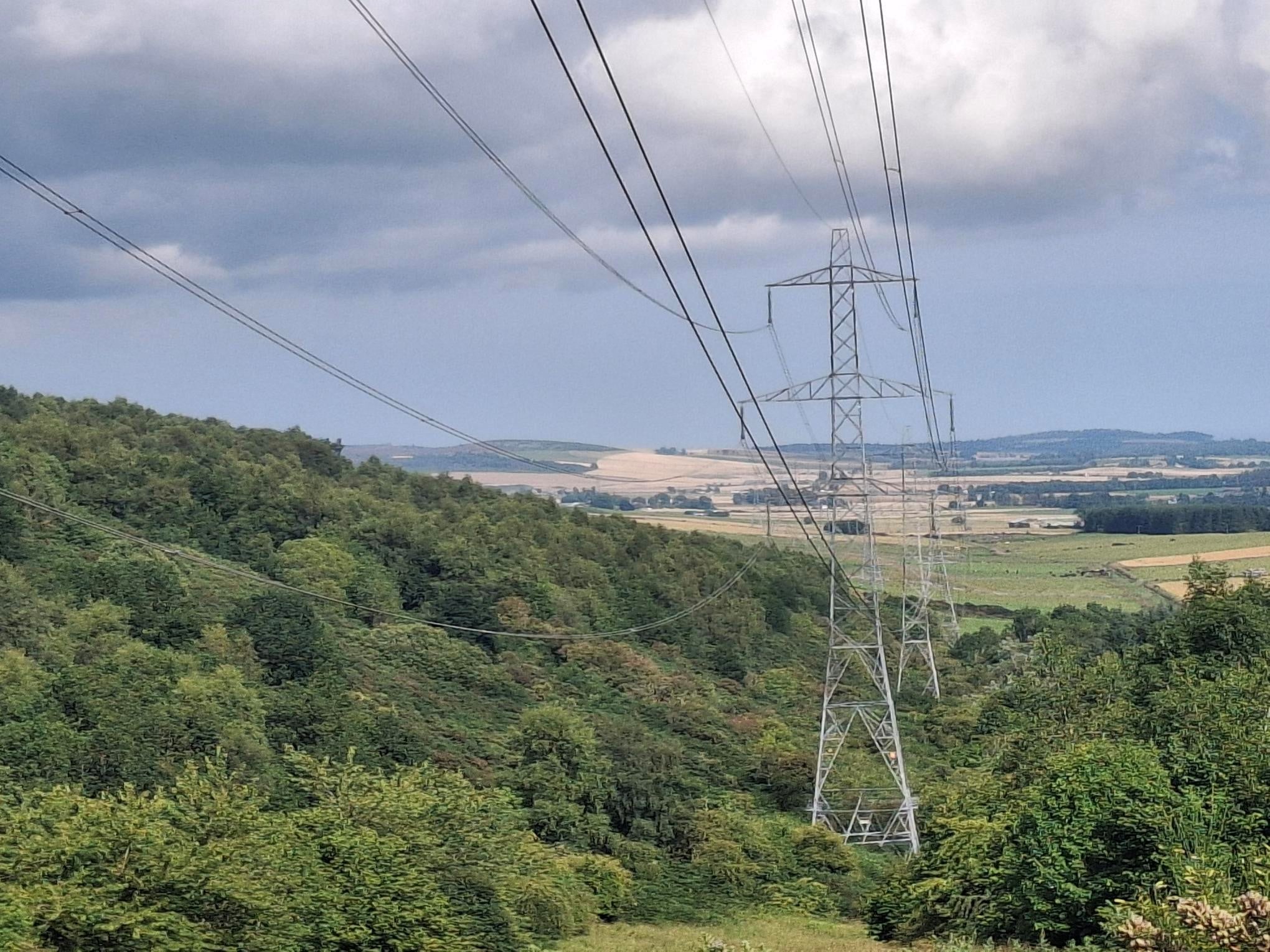
We welcome the decision by Scottish Ministers to grant Section 37 consent for our Alyth - Tealing overhead line 400kV upgrade project.
The positive consent decision for this project will see the existing overhead lines, insulators and fittings between Alyth and Tealing being upgraded from 275kV to operate at 400kV, increasing the lines capacity to enable the continued growth in low carbon electricity generation across the north of Scotland.
Reconductoring involves upgrading transmission lines by replacing the overhead conductors and insulators – the components that carry electricity between towers - with newer, often more efficient versions between existing transmission towers.
The project will use existing towers between Alyth and Tealing substations, with the overhead conductors, fittings and insulators replaced along the approximate 14km stretch of the route. Works to reinforce existing tower foundations and steel structures will be undertaken, although no additional towers will be constructed as part of the project.
Receiving Section 37 consent from Scottish Ministers marks a major milestone for the project and another significant step forward towards construction. Enabling works are expected to begin in 2026, with reconductoring due to get underway in 2028.
We will ensure that we keep all stakeholders informed of timelines associated with the project as construction programmes are further defined. The project is expected to generate more than £2.8m in community benefit funding, with more details to follow in the coming months on how this will be made available.
Please do not hesitate to contact us via the dedicated project inbox, tkup@sse.com if you have any questions on the above or the project in general. -

Advanced Public Road Improvement (PRI) works
Balfour Beatty our Principal Contractor from 8 September 2025 will be commencing further topographical and service investigation surveys as part of our advanced Public Road Improvement (PRI) works. This will comprise of survey works within the Local Authority verge and 3rd party land at various access points along the OHL route. These works are expected to last approximately 8 weeks.
PRI works include assessing selected public roads with regards to their suitability to accommodate construction traffic. It will take into account the condition of the road, the width and availability of passing places. If found that roads in their current condition are not suitable for construction traffic, mitigation work will be sought.
Traffic management will be in place for the service investigation surveys to ensure the safety of both road users and our workforce, advance signage will be installed ahead of the surveys commencing in the areas affected. Access for key services including emergency access will be provided at all times (even under road closures). All traffic management measures will be discussed and agreed with the Local Authority Road Departments and communicated through the appropriate channels.
Advanced Public Road Improvement (PRI) Works
Balfour Beatty our Principal Contractor from 8 September 2025 will be commencing further topographical and service investigation surveys as part of our advanced Public Road Improvement (PRI) works. This will comprise of survey works within the Local Authority verge and 3rd party land at various access points along the OHL route. These works are expected to last approximately 8 weeks.
PRI works include assessing selected public roads with regards to their suitability to accommodate construction traffic. It will take into account the condition of the road, the width and availability of passing places. If found that roads in their current condition are not suitable for construction traffic, mitigation work will be sought.
Traffic management will be in place for the service investigation surveys to ensure the safety of both road users and our workforce, advance signage will be installed ahead of the surveys commencing in the areas affected. Access for key services including emergency access will be provided at all times (even under road closures). All traffic management measures will be discussed and agreed with the Local Authority Road Departments and communicated through the appropriate channels. -
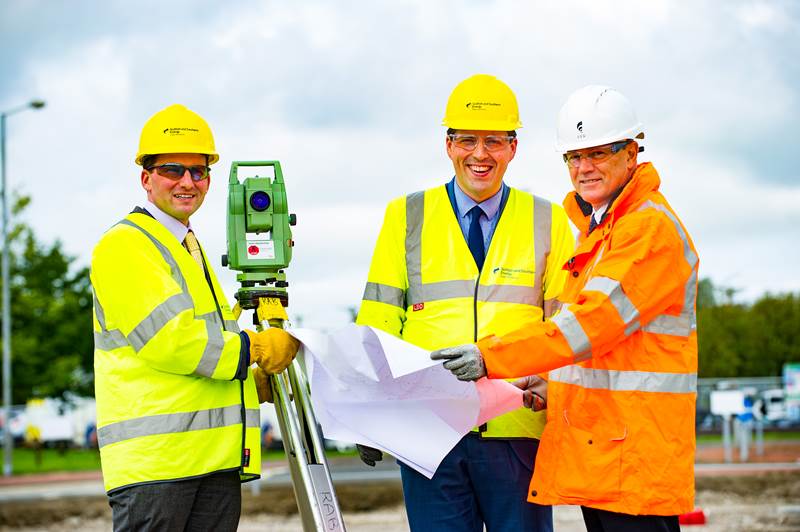
Ground Investigations
Following the submission of our Section 37 Application in December 2024 for the proposed Alyth - Tealing overhead line 400kV upgrade project we have been continuing to further refine and develop the design.
Our project teams and contractors have been carrying out walkover surveys and access track investigation works for several months, which are necessary steps in any development to fully understand the ground conditions in the area and help establish the final designs. These surveys and investigations will continue for the next three to four months.
All of these works are carried out using Permitted Development rights available to SSEN Transmission under Class 40, (1), (c) of the Town and Country Planning (General Permitted Development) (Scotland) Order 1992 as amended. These are necessary survey works, and we are working closely with relevant departments in the respective Local Authorities (e.g. Road, Planning, Access), Statutory Partners and Landowners.
Going forward, we will communicate important updates through the ‘Project updates’ section of this webpage (see ‘Project Update’ tab above) where the works details will be available.
Our contractors will work to keep local disturbance to a minimum throughout the duration of these works. For any enquiries, please contact TKUP@sse.com.
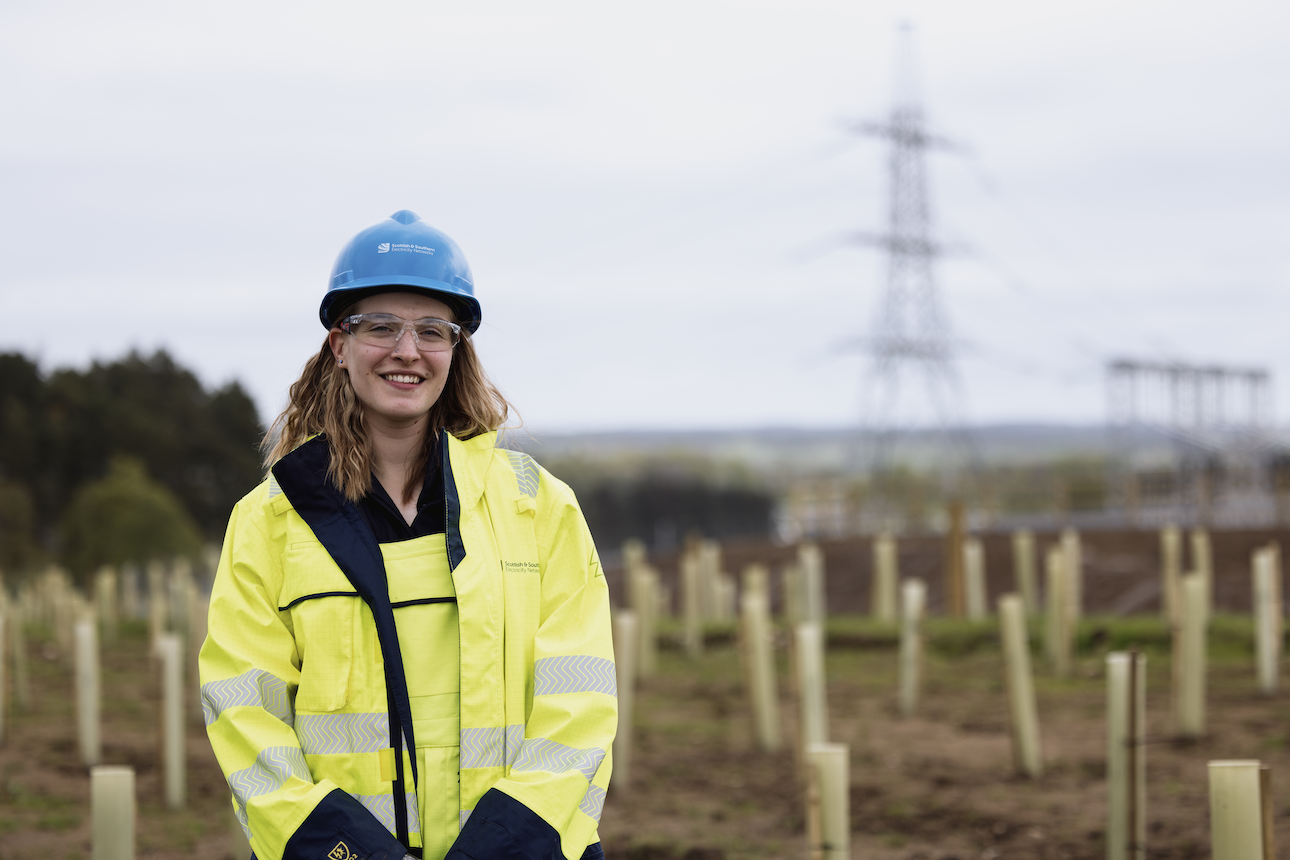
Conductor Sampling Works
Following the submission of our Section 37 Application in December 2024 for the proposed Tealing - Westfield overhead line 400kV upgrade we have been continuing to further refine and develop the design.
We plan to undertake some conductor sampling work from the 16 July to 7 August. This is an important element of our design work that is required before reconductoring overhead transmission lines to assess the existing conductor's condition and suitability for continued use. This process helps determine the extent of corrosion or damage, ensuring the new conductor is compatible and meets performance standards.
Our project teams and contractors have also been carrying out walkover surveys and access track investigation works for several months, which are necessary steps in any development to fully understand the ground conditions in the area and help establish the final designs. These surveys and investigations will continue for the next three to four months.
All of these works are carried out using Permitted Development rights available to SSEN Transmission under Class 40, (1), (c) of the Town and Country Planning (General Permitted Development) (Scotland) Order 1992 as amended. These are necessary survey works, and we are working closely with relevant departments in the respective Local Authorities (e.g. Road, Planning, Access), Statutory Partners and Landowners.
Our contractors will work to keep local disturbance to a minimum throughout the duration of these works. For any enquiries, please contact TKUP@sse.com.
-
Public Road Improvements
In the interest of the upcoming project our Principal Contractor Balfour Beatty and their sub-contractor Tony Gee design teams will be out on the road network for the next 4 weeks carrying out micro-siting works for public road improvements. This work comprises of stopping in suitable and safe locations on the carriageway to carry out site measurements and obtain photographic records along the existing OHL route. These works will span the whole length of the line and will be carried out on public roads only with no access being required to 3rd party land or private roads.
If you have any questions or queries pertaining to the above information or the project in general, please do not hesitate to e-mail Nicki McLuskey at TKUP@sse.com.
Public Road Improvements
In the interest of the upcoming project our Principal Contractor Balfour Beatty and their sub-contractor Tony Gee design teams will be out on the road network for the next 4 weeks carrying out micro-siting works for public road improvements. This work comprises of stopping in suitable and safe locations on the carriageway to carry out site measurements and obtain photographic records along the existing OHL route. These works will span the whole length of the line and will be carried out on public roads only with no access being required to 3rd party land or private roads.
If you have any questions or queries pertaining to the above information or the project in general, please do not hesitate to e-mail Nicki McLuskey at TKUP@sse.com.
-

Planning Application
Following the second pre application consultation feedback events that were hosted in June at several locations within Angus and Perth and Kinross we can confirm that we have now submitted our S37 consent application to the Scottish Ministers at the Energy Consents Unit (ECU).
The Alyth – Tealing OHL upgrade is part of a wider upgrade to the transmission network in the north of Scotland, helping deliver high voltage, clean renewable power for connection to homes and businesses across the UK – helping meet national net zero and energy security ambitions.
Under Section 37 of the Electricity Act 1989 we have applied to Scottish Ministers for consent to upgrade approximately 14km of the existing 275kV OHL between Alyth substation and Tower 685 north west of Tealing substation, to enable operation at 400kV.
Should you wish to view our application in full and submit formal comment to the Scottish Ministers it is available to be viewed via the ECU’s application portal, using reference ECU00005167. Any representations in respect of the application may be submitted by email to the Scottish Government via representations@gov.scot; or by post to the Scottish Government, Energy Consents Unit, 4th Floor, 5 Atlantic Quay, 150 Broomielaw, Glasgow, G2 8LU, identifying the proposal and specifying the grounds for representation.
All the documentation submitted as part of the application can also be viewed and downloaded via the documents section of this webpage.
We would like to thank those who provided feedback as part of our pre-application consultation events, which have been key in helping us shape our proposals and we now look forward to working with the Scottish Government and other key stakeholders as part of the consenting process.
Planning Application
Following the second pre application consultation feedback events that were hosted in June at several locations within Angus, Perth and Kinross and Fife we can confirm that we have now submitted our S37 consent application to the Scottish Ministers at the Energy Consents Unit (ECU)
The Tealing – Westfield OHL upgrade is part of a wider upgrade to the transmission network in the north of Scotland, helping deliver high voltage, clean renewable power for connection to homes and businesses across the UK – helping meet national net zero and energy security ambitions.
Under Section 37 of the Electricity Act 1989 we have applied to Scottish Ministers for consent to upgrade approximately 37km of existing 275kV OHL between Tower 182 (west of Tealing substation) and the licence boundary with Scottish Power Energy Networks (SPEN) OHL network, to enable operation at 400kV.
Should you wish to view our application in full and submit formal comment to the Scottish Ministers it is available to be viewed via the ECU’s application portal, using reference ECU00005168. Any representations in respect of the application may be submitted by email to the Scottish Government via representations@gov.scot; or by post to the Scottish Government, Energy Consents Unit, 4th Floor, 5 Atlantic Quay, 150 Broomielaw, Glasgow, G2 8LU, identifying the proposal and specifying the grounds for representation.
All the documentation submitted as part of the application can also be viewed and downloaded via the documents section of this webpage.
We would like to thank those who provided feedback as part of our pre-application consultation events, which have been key in helping us shape our proposals and we now look forward to working with the Scottish Government and other key stakeholders as part of the consenting process. -
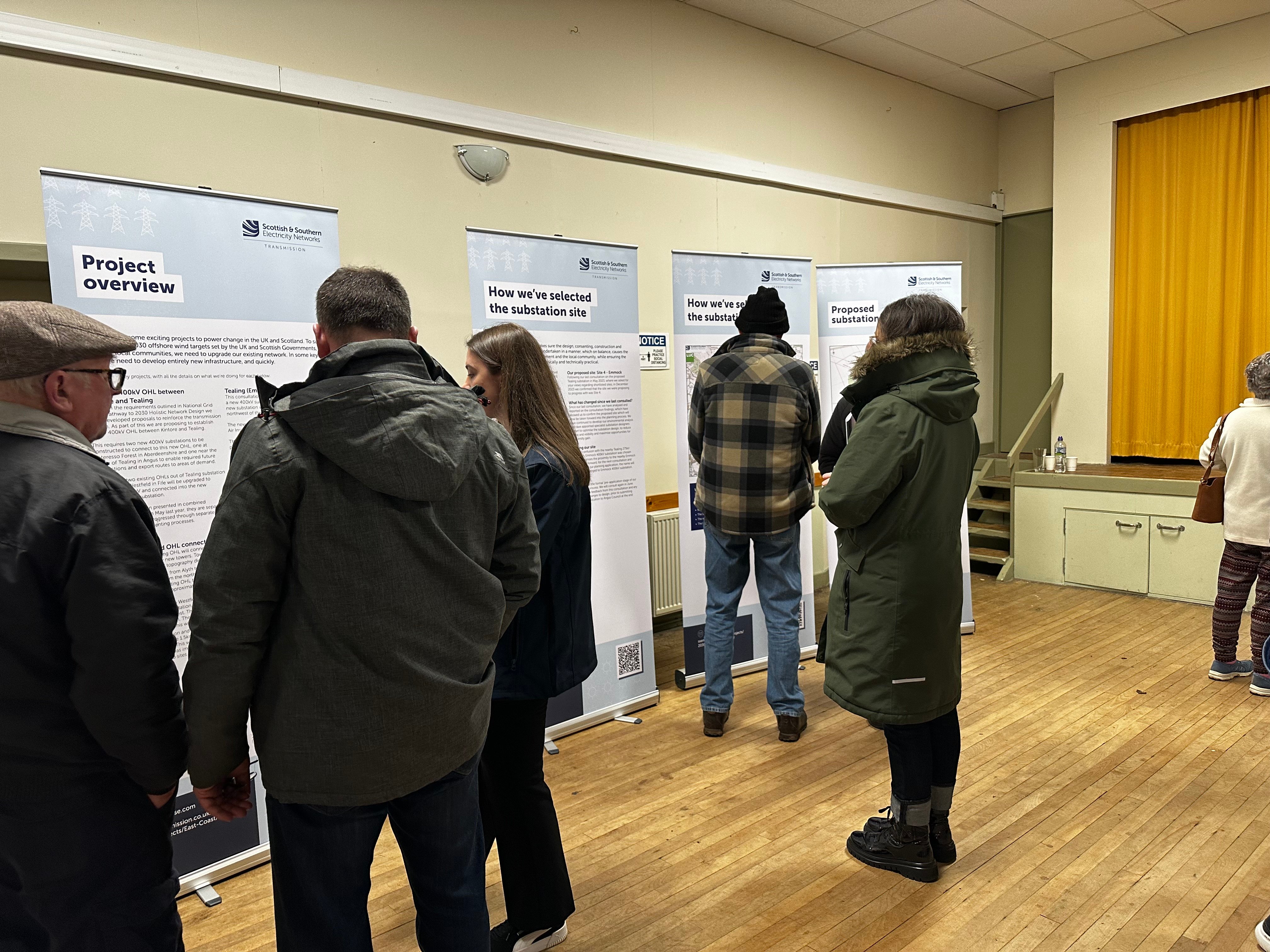
June 2024 Consultation Feedback Period Closed
We would like to extend thanks to all members of the public, local stakeholders and other interested parties who took the time to provide feedback on our proposals for the Emmock 400kV substation project.
The feedback period for providing comments following our consultations that we held in June 2024 has now closed. All responses received will now be reviewed by the project team ahead of submission of a Section 37 planning application to The Scottish Ministers.
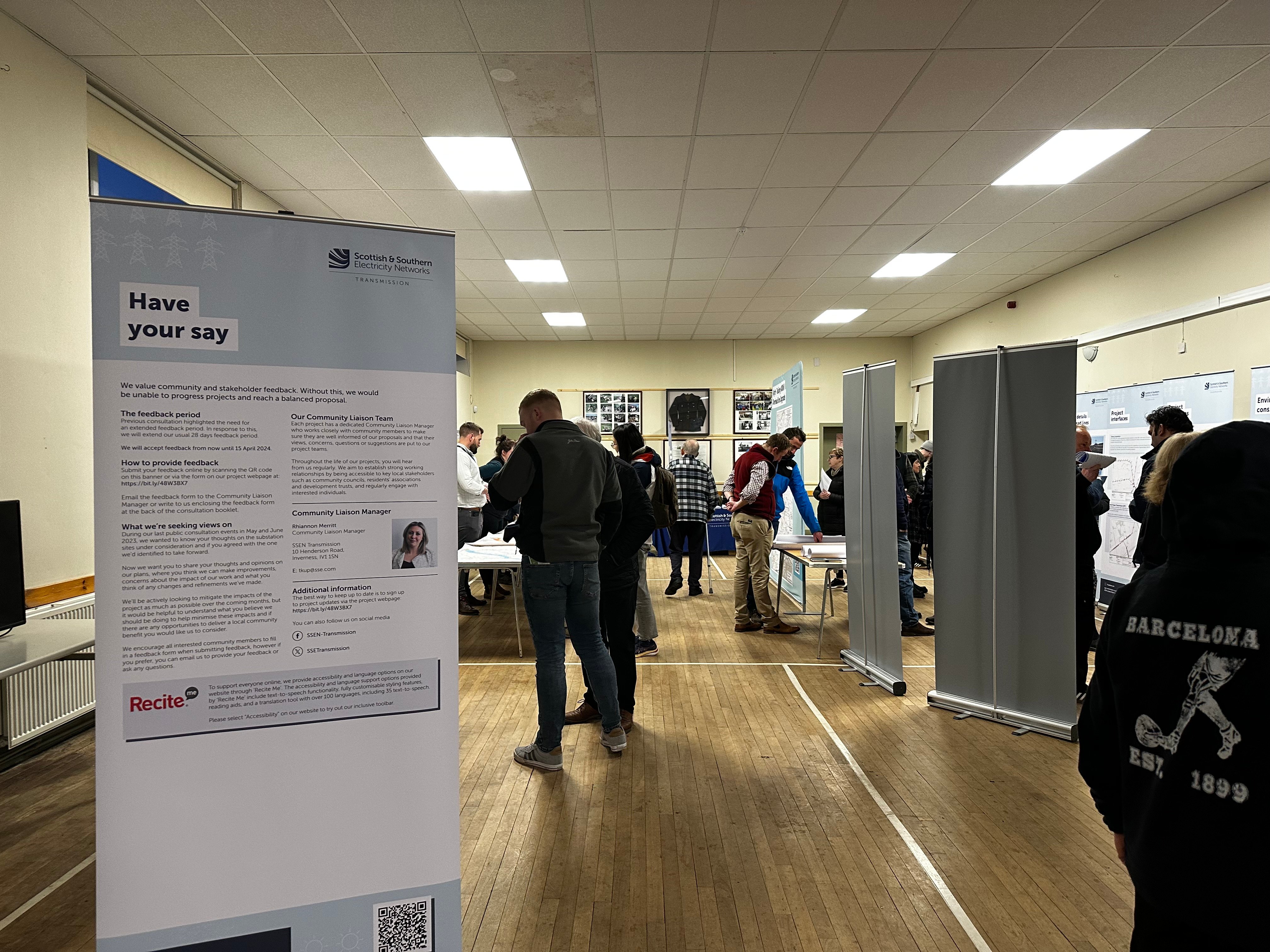
June 2024 Consultation Feedback Period Closed
We would like to extend thanks to all members of the public, local stakeholders and other interested parties who took the time to provide feedback on our proposals for the Emmock 400kV substation project.
The feedback period for providing comments following our consultations that we held in June 2024 has now closed. All responses received will now be reviewed by the project team ahead of submission of a Section 37 planning application to The Scottish Ministers. -
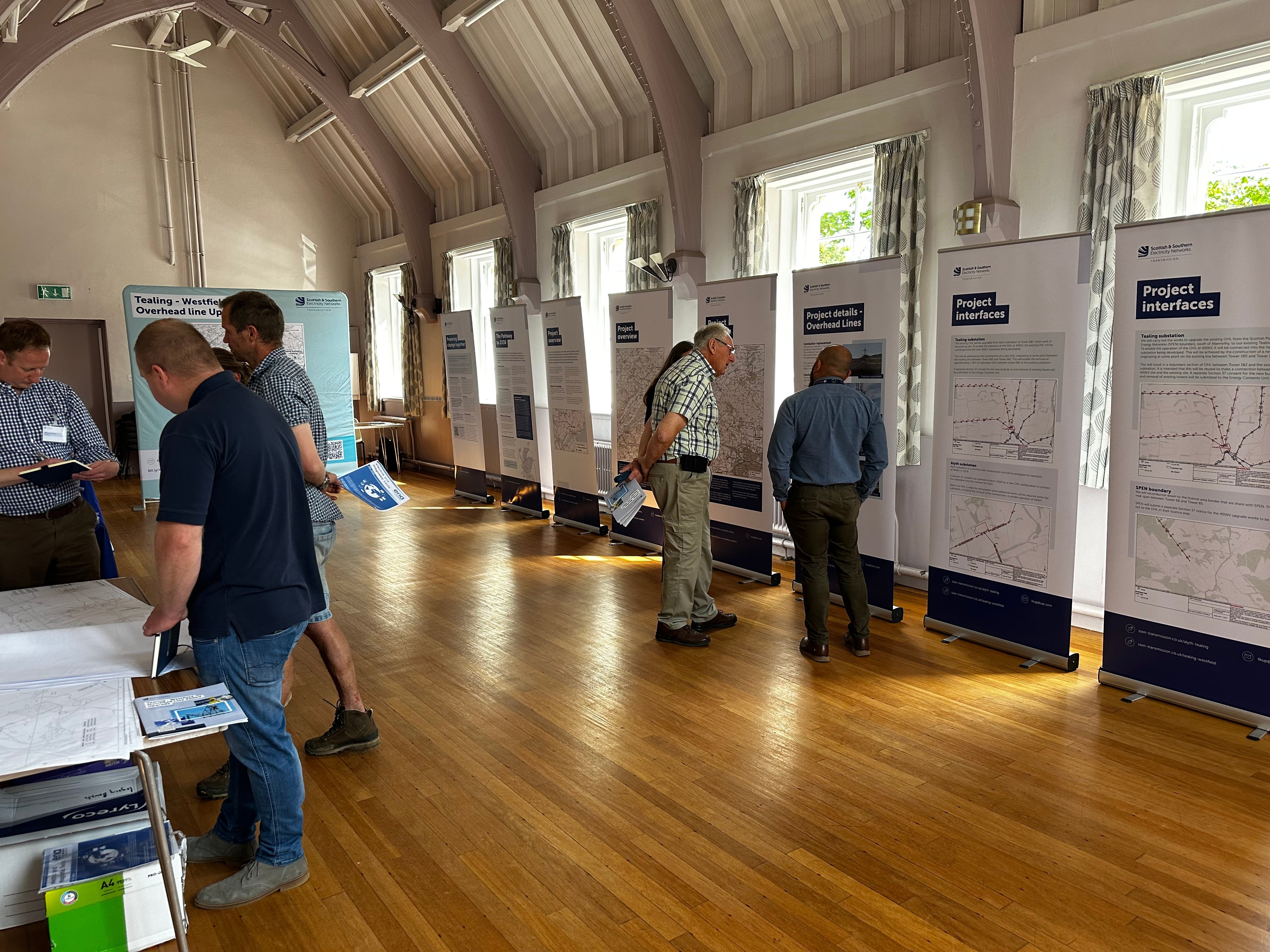
June 2024 Consultation Feedback
We would like to thank all local community members and interested parties who took the time to attend our recent June 2024 consultation events which took place between 3-6 June.
We will accept feedback from now until 18 July 2024. During our last public consultation events in March 2024, we wanted to know your thoughts on our project plans, where you thought we could make improvements, and any changes and refinements we’d made.
We are now asking for any final comments or feedback ahead of submitting planning applications for the Tealing - Westfield OHL 400kV upgrade project.
Submit your comments and feedback by emailing tkup@sse.com or writing to your Community Liaison Manager Rhiannon Merritt at SSEN Transmission, 10 Henderson Road, Inverness, IV1 1SN.
Any comments made to us as the Applicant are not representations to Scottish Ministers as the decision makers. There will be an opportunity to make formal representations to Scottish Ministers via the Energy Consents Unit following the submission of the section 37 applications.
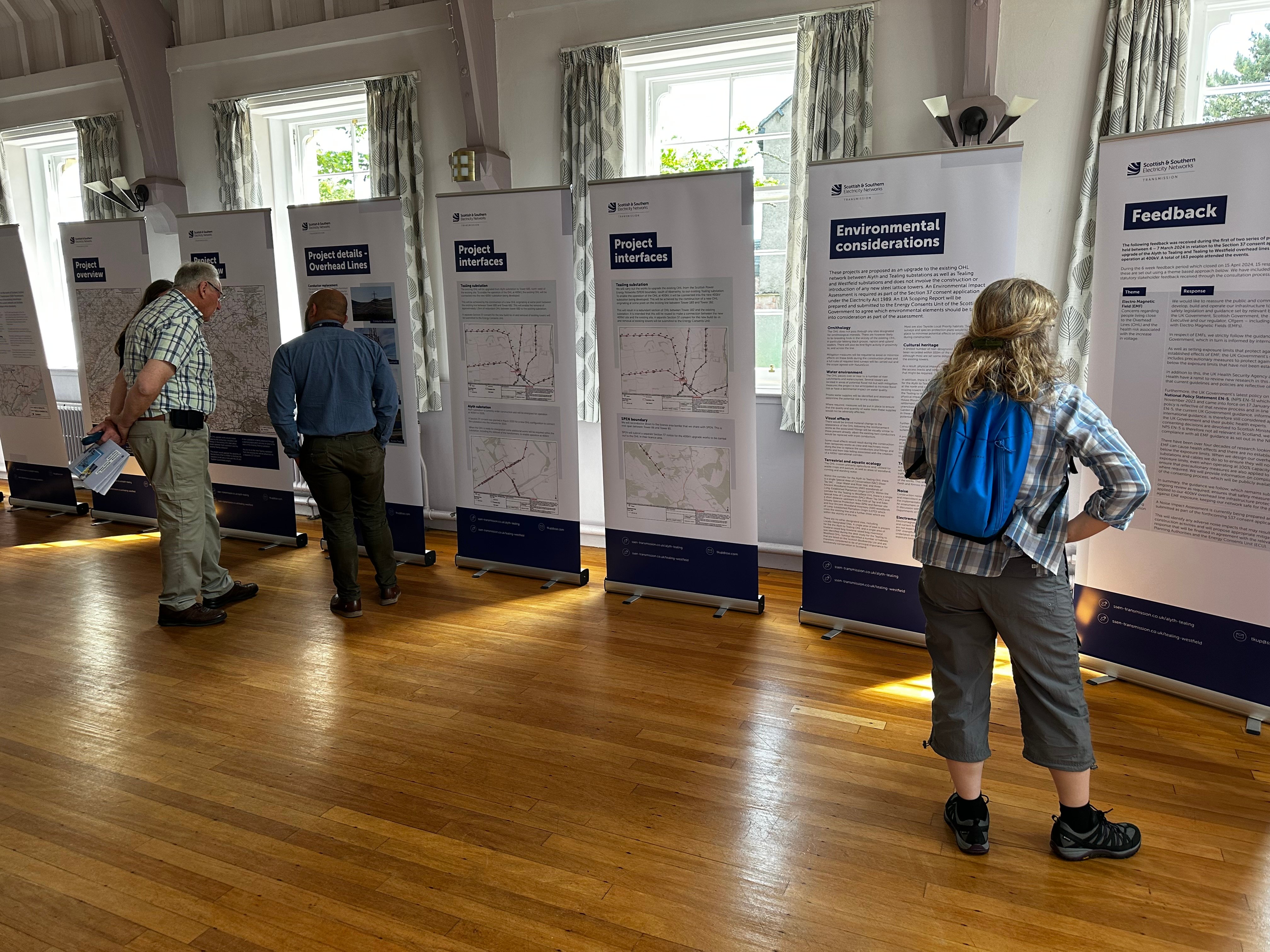
June 2024 Consultation Feedback
We would like to thank all local community members and interested parties who took the time to attend our recent June 2024 consultation events which took place between 3-6 June.
We will accept feedback from now until 18 July 2024. During our last public consultation events in March 2024, we wanted to know your thoughts on our project plans, where you thought we could make improvements, and
any changes and refinements we’d made.
We are now asking for any final comments or feedback ahead of submitting planning applications for the Alyth - Tealing OHL 400kV upgrade project.
Submit your comments and feedback by emailing tkup@sse.com or writing to your Community Liaison Manager Rhiannon Merritt at SSEN Transmission, 10 Henderson Road, Inverness, IV1 1SN.
Any comments made to us as the Applicant are not representations to Scottish Ministers as the decision makers. There will be an opportunity to make formal representations to Scottish Ministers via the Energy Consents Unit following the submission of the section 37 applications. -
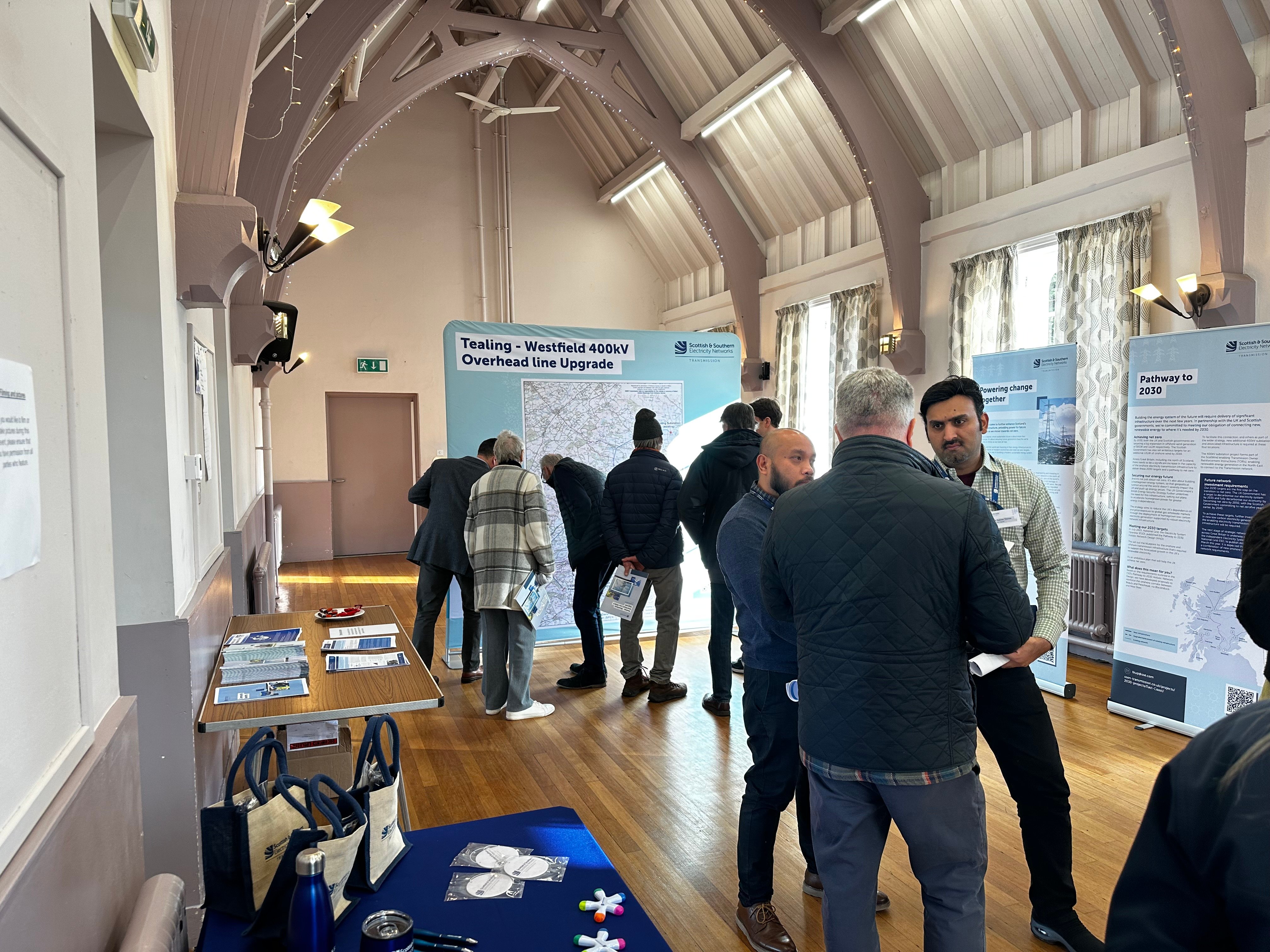
June 2024 public consultation events
We are pleased to announce our second series of public consultation events being held in relation to the Section 37 consent application for the upgrade of the Alyth to Tealing and Tealing to Westfield overhead line from 275kV to enable operation at 400kV.
The events will run from 2-7pm at the times and at the locations set out below:
3 June 2024 - Errol Village Hall, North Bank Dykes, Errol, PH2 7QH
4 June 2024 - Tayside Institute Community Centre, 90-92 High Street, Newburgh, KY14 6DA
5 June 2024 - Tealing Village Hall, Hall Road, Inveraldie, Tealing, DD4 0QW
6 June 2024 - Alyth Town Hall, Victoria Street, Alyth, PH11 8AX
If you are unable to attend any of the planned in-person events, all the material that will be on display will also be available to download from the project documents section of this website from 20 May 2024.During our drop-in events you will be able to veiw furhter information about our proposals, meet the team and ask questions. The feedback period will remain open until 18 July 2024.
You can submit your feedback by emailing tkup@sse.com or writing to us at SSEN Transmission, 10 Henderson Road, Inverness, IV1 1SN.
Comments made to the applicant are not representations to the Scottish Ministers and if the applicant submits an application there will be an opportunity to make representations on that application to the Scottish Ministers.
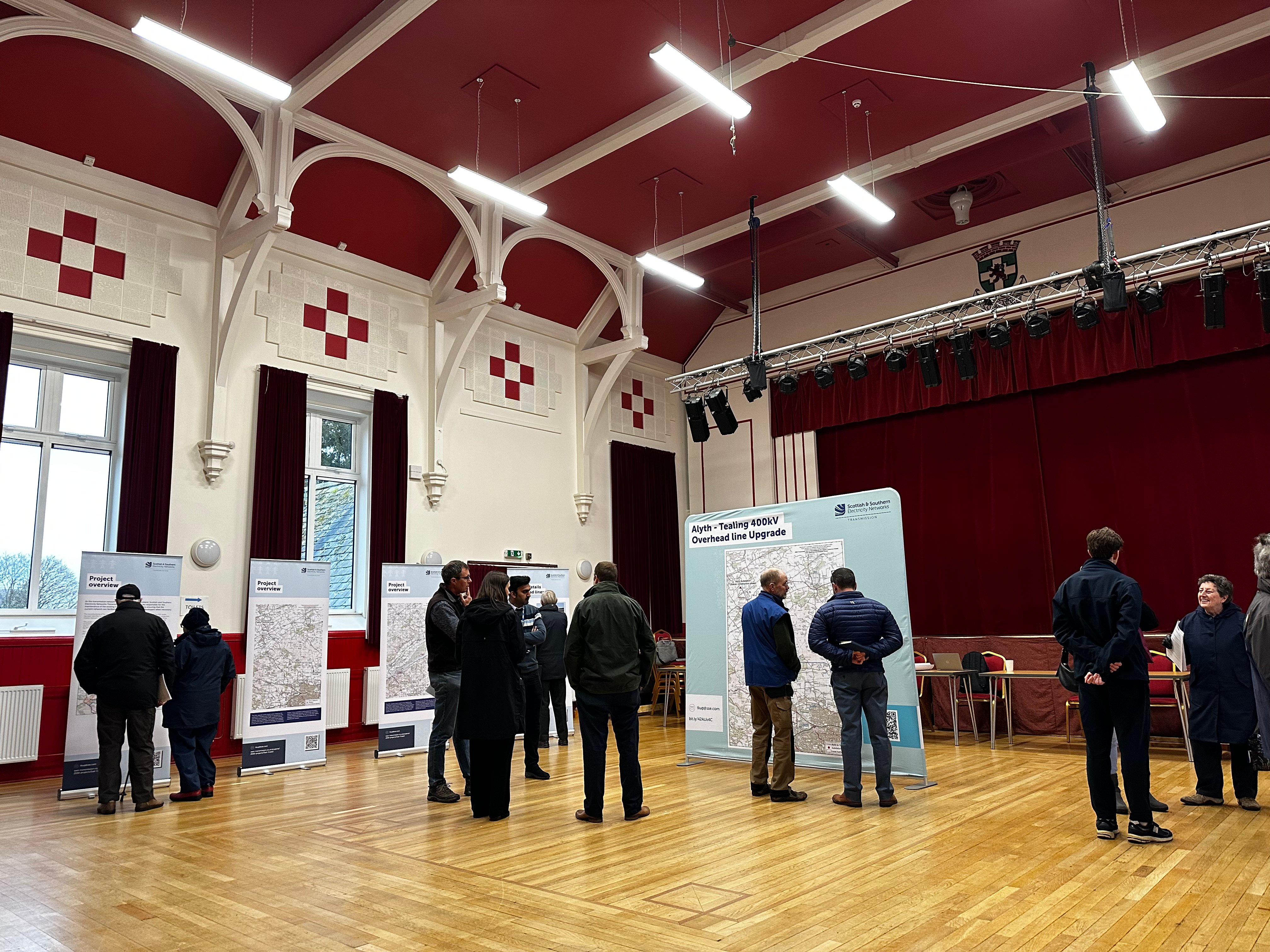
June 2024 public consultation events
We are pleased to announce our second series of public consultation events being held in relation to the Section 37 consent application for the upgrade of the Alyth to Tealing and Tealing to Westfield overhead line from 275kV to enable operation at 400kV.
The events will run from 2-7pm at the times and at the locations set out below:
3 June 2024 - Errol Village Hall, North Bank Dykes, Errol, PH2 7QH
4 June 2024 - Tayside Institute Community Centre, 90-92 High Street, Newburgh, KY14 6DA
5 June 2024 - Tealing Village Hall, Hall Road, Inveraldie, Tealing, DD4 0QW
6 June 2024 - Alyth Town Hall, Victoria Street, Alyth, PH11 8AX
If you are unable to attend any of the planned in-person events, all the material that will be on display will also be available to download from the project documents section of this website from 20 May 2024.
During our drop-in events you will be able to veiw furhter information about our proposals, meet the team and ask questions. The feedback period will remain open until 18 July 2024.
You can submit your feedback by emailing tkup@sse.com or writing to us at SSEN Transmission, 10 Henderson Road, Inverness, IV1 1SN.
Comments made to the applicant are not representations to the Scottish Ministers and if the applicant submits an application there will be an opportunity to make representations on that application to the Scottish Ministers. -
March 2024 feedback period closed
We would like to extend thanks to all members of the public, local stakeholders and other interested parties who took the time to provide feedback on our proposals for the Tealing - Westfield overhead line 400kV upgrade project.
The feedback period for providing comments following our consultations that we held in March 2024 has now closed. All responses received will now be reviewed by the project team ahead of the next round of consultations which is expected to take place in summer.
Although the formal consultation period has closed for the latest events that we held, engagement with affected communities and wider stakeholders will continue beyond the consultation deadline and we will continue to engage with all stakeholders.
March 2024 feedback period closed
We would like to extend thanks to all members of the public, local stakeholders and other interested parties who took the time to provide feedback on our proposals for the Alyth - Tealing overhead line 400kV upgrade project.
The feedback period for providing comments following our consultations that we held in March 2024 has now closed. All responses received will now be reviewed by the project team ahead of the next round of consultations which is expected to take place in summer.
Although the formal consultation period has closed for the latest events that we held, engagement with affected communities and wider stakeholders will continue beyond the consultation deadline and we will continue to engage with all stakeholders. -

March 2024 public consultation
We would like to thank all local community members and stakeholders who took the time to attend our recent March 2024 public consultation events which took place 4 – 7 March with 3 in person events covering the Tealing-Westfield OHL 400kV upgrade.
Our public consultation remains open until 15 April. We welcome all interested parties to submit their feedback regarding the proposals presented during consultation via;
Online feedback form: Tealing - Westfield Overhead Line 400kV Upgrade Consultation Feedback Form
Email: tkup@sse.com
Post: FAO Rhiannon Merritt, SSEN Transmission, 10 Henderson Road, Inverness, IV1 1SN.
Our virtual consultation portal will remain available throughout the consultation period here.Copies of the consultation booklet and maps available to download via the ‘Project Documents’ section of this project website.
March 2024 public consultations
We would like to thank all local community members and stakeholders who took the time to attend our recent March 2024 public consultation events which took place 4 – 7 March with 2 in person events covering the Alyth-Tealing OHL 400kV upgrade.
Our public consultation remains open until 15 April. We welcome all interested parties to submit their feedback regarding the proposals presented during consultation via;
Online feedback form: Alyth - Tealing Overhead Line 400kV Upgrade Consultation Feedback Form
Email: tkup@sse.com
Post: FAO Rhiannon Merritt, SSEN Transmission, 10 Henderson Road, Inverness, IV1 1SN
Our virtual consultation portal will remain available throughout the consultation period here.
Copies of the consultation booklet and maps are available to download via the ‘Project Documents’ section of this project website.
-
March 2024 public consultation period is now open
We are pleased to announce the first of two series of public consultation events being held in relation to the Section 37 consent application for the upgrade of the Alyth to Tealing and Tealing to Westfield overhead line from 275kV to enable operation at 400kV.
The events will run from 2-7pm at the times and at the locations set out below:
4 March 2024 Errol, Errol Village Hall, North Bank Dykes, Errol, PH2 7QH5 March 2024 Newburgh, Tayside Institute Community Centre, 90-92 High Street, Newburgh, KY14 6DA
6 March 2024 Alyth, Alyth Town Hall, Victoria Street, Alyth, PH11 8AX
7 March 2024 Tealing, Tealing Village Hall, Hall Road, Inveraldie, Tealing, DD4 0QW
If you are unable to attend any of the planned in-person events, all the material that will be on display can also be downloaded from the project documents section of this dedicated project website at the start of the consultation period.
You can submit your feedback until 15 April 2024 for this project via the feedback form on the project website, by emailing tkup@sse.com or writing to us at SSEN Transmission, 10 Henderson Road, Inverness, IV1 1SN.
Comments made to the applicant are not representations to the Scottish Ministers and if the applicant submits an application there will be an opportunity to make representations on that application to the Scottish Ministers.Following the events held in May 2023, many enquiries we received were about the need for the projects, the engagement process, environmental considerations, and what alternative technologies may be available. We have compiled ‘Frequently Asked Questions’ to address many of these points which can be viewed here.
-
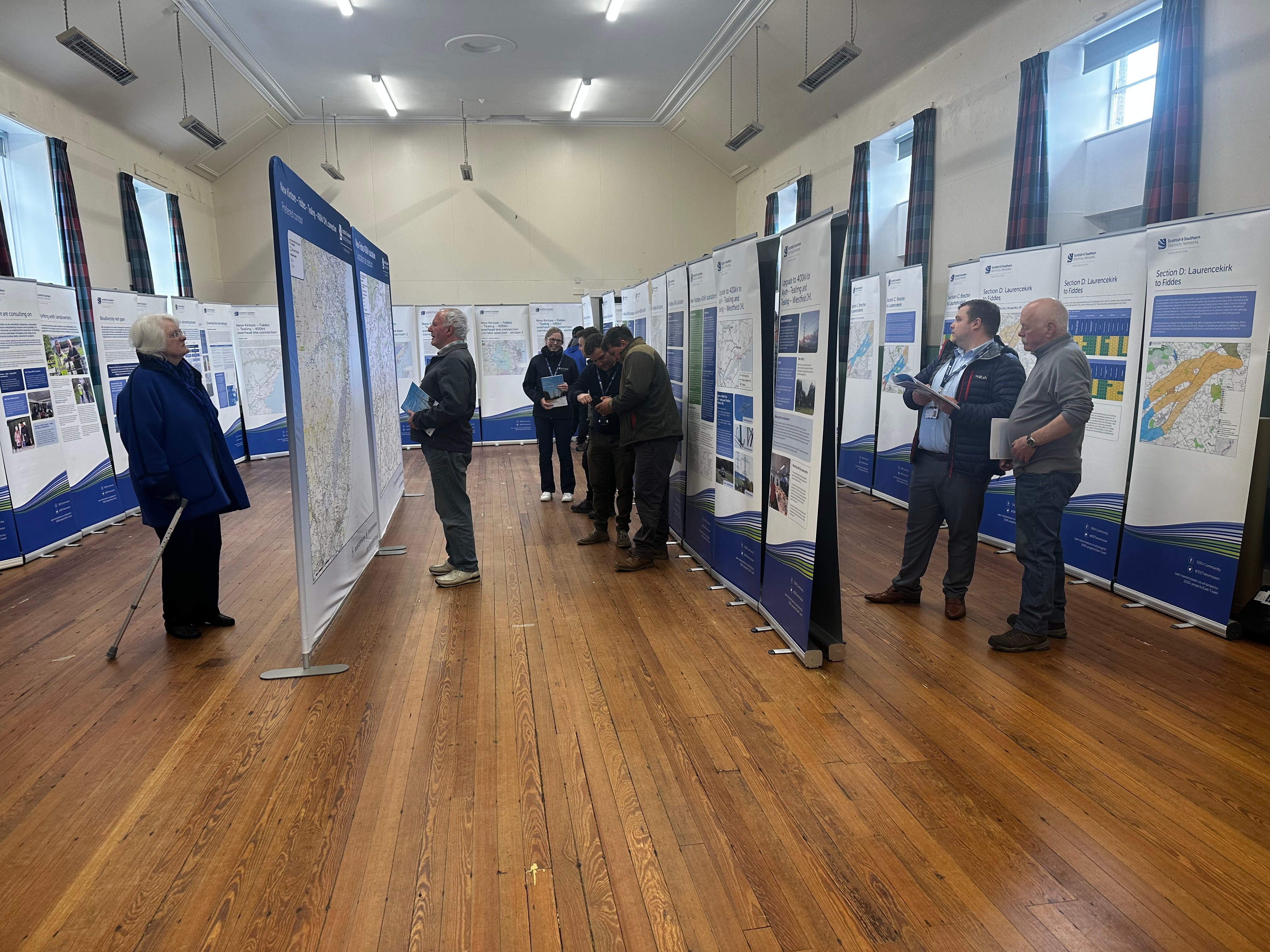
Webinar: Update on ‘Pathway to 2030’ Projects
On the 13 December we held a stakeholder webinar ‘Update on Pathway to 2030 Projects’ to hear about some of the primary changes to our ‘Pathway to 2030’ projects which we’ve been working on since our public consultations earlier this year. Thank you to the 500+ stakeholders who were able to join us.The recording of the event and slide packs are available below for those who were unable to attend.
Report on Consultation
Our Reports on Consultation across our three new overhead line projects and associated substation and convertor station developments have now been published. These reports provide a summary of the extensive feedback received during consultation, how this has been considered and confirmation of which routes and substations are now being taken forward to the next stage of development.
Our Reports on Consultation are now available to download from the Project Documentation tab.
Summary Reports on Consultation are also available for each of the three schemes and can be downloaded below:
- Summary Report on Consultation Beauly to Peterhead
- Summary Report on Consultation Spittal to Beauly
- Summary Report on Consultation Kintore to Tealing
A stakeholder webinar available for all to join will be held in the coming weeks to share the changes informed by the feedback. More information about the forthcoming webinar will be shared on our events page shortly.
In further recognition of community feedback, we will seek to rationalise cumulative infrastructure impacts through the removal and undergrounding of existing transmission lines, where technically practical and appropriate, and subject to all necessary planning consents and landowner agreements.
Work to identify and assess potential sections of existing overhead line where their removal will reduce cumulative impacts is ongoing, with an update expected as part of the next round of public consultation on overhead line alignments and more detailed substation designs in early 2024.
We would once again like to thank all stakeholders who took the time to engage with our early consultation process. We will continue to engage with stakeholders ahead of consulting further with local communities and stakeholders in the new year, as we look to refine our proposals.
-
Report on Consultation
Over the course of this year, we have undertaken extensive consultation on plans to upgrade the electricity transmission network across the north of Scotland and have received a considerable amount of feedback from a wide range of stakeholders regarding our proposals.
We recently advised in our next steps for 2030 network developments update that following assessment of consultation feedback and additional options analysis, we would publish our Report on Consultations (RoCs). These reports provide a summary of the feedback received and how it has been considered, which options we will take forward to the next stage of the development process and any changes to options initially consulted on.
It is our intention to publish the RoCs for this project in the coming months. All stakeholders signed up for updates on the project will receive a link to the report and we will also issue Summary Reports to help ensure accessibility.
These Report on Consultations mark the completion of the first round of non-statutory consultation, where we sought feedback on the corridor, route, and substation locations. We will be consulting further with local communities and stakeholders in the new year, as we look to refine the projects, therefore we welcome an open channel of communication and would like to reassure all stakeholders that there will be further opportunities to engage on this project.
Our Reports on Consultation and Summary Reports on Consultation are now available to download from the Project Documentation tab. -
SSEN Transmission sets out next steps for Pathway to 2030 network developments
We have announced our next steps for our Pathway to 2030 programme of projects. We would like to thank everyone who has engaged with our teams and kindly taken the time to respond to our consultations.
Full details of the announcement can be found here:
Next steps for Pathway to 2030 -
Feedback period closed
The feedback period on our recent period of consultation for our East coast 400kV Phase 2 proposals which sought feedback on potential corridor and route options and preferred substation locations has now closed.
Further engagement with affected communities and wider stakeholders will continue beyond this consultation deadline, particularly in areas of local sensitivity, to help with our ongoing project development. The outcomes of the consultation exercise will be reported publicly in a Report on Consultation.
Throughout the development phase we will continue to engage with stakeholders and intend to hold a second public consultation event towards the end of the year.
Feedback period closed
The feedback period on our recent period of consultation for our East coast 400kV Phase 2 proposals which sought feedback on potential corridor and route options and preferred substation locations has now closed.
Further engagement with affected communities and wider stakeholders will continue beyond this consultation deadline, particularly in areas of local sensitivity, to help with our ongoing project development. The outcomes of the consultation exercise will be reported publicly in a Report on Consultation.
Throughout the development phase we will continue to engage with stakeholders and intend to hold a second public consultation event towards the end of the year. -
Feedback period extension
To allow more time for those interested in the East Coast 400kV phase 2 project to share their views we have extended the consultation period until Friday 28 July in recognition of the extent of local interest in the project and to allow stakeholders and members of the community more time to share their views on the initial proposals.
We would also like to reassure stakeholders that no decisions have yet been taken on potential overhead line routes or substation locations and the project remains at the early stages of development. All feedback received through the consultation will be carefully considered to help inform the ongoing development of this project.
If you have been unable to attend one of our consultation events, you can find all of the relevant consultation documentation within the project documents tab on this webpage.
Feedback period extension
To allow more time for those interested in the East Coast 400kV phase 2 project to share their views we have extended the consultation period until Friday 28 July in recognition of the extent of local interest in the project and to allow stakeholders and members of the community more time to share their views on the initial proposals.
We would also like to reassure stakeholders that no decisions have yet been taken on potential overhead line routes or substation locations and the project remains at the early stages of development. All feedback received through the consultation will be carefully considered to help inform the ongoing development of this project.
If you have been unable to attend one of our consultation events, you can find all of the relevant consultation documentation within the project documents tab on this webpage.
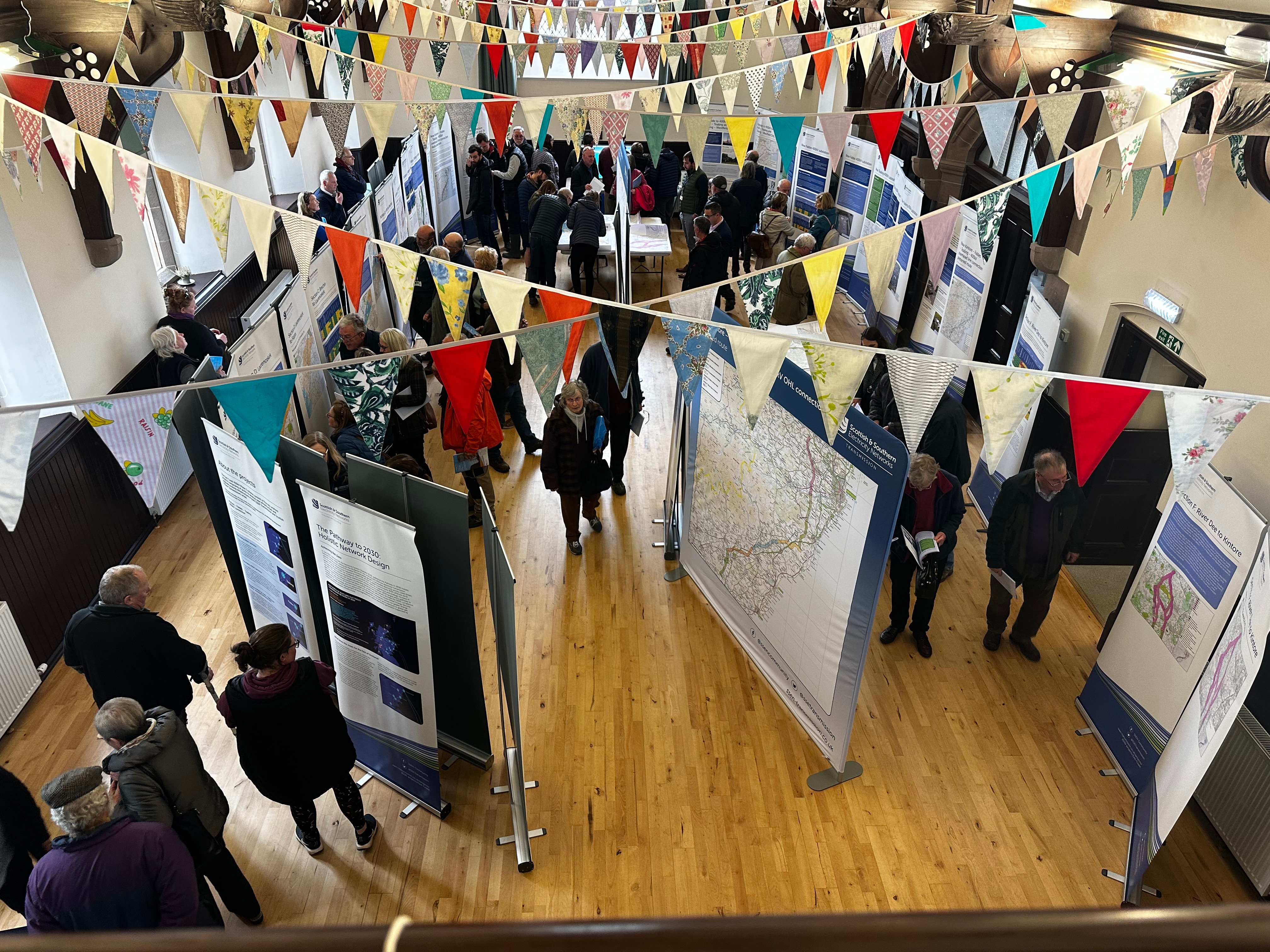
Initial response to consultation
We would like to thank all stakeholders who have taken the time to provide their feedback on our proposals to develop the East Coast 400kV phase 2 projects.
Following an initial review of the feedback received so far, SSEN Transmission has published an initial response to address some of the key themes which have been identified. Once the feedback period closes, a detailed Report on Consultation will also be published to explain how feedback has been considered to inform the more detailed network design.
The consultation period remains open and we continue to encourage anyone with an interest in the project to share their views by Friday 23 June.
The initial response to consultation is available to be downloaded from the project documents section of this website.
Initial response to consultation
We would like to thank all stakeholders who have taken the time to provide their feedback on our proposals to develop the East Coast 400kV phase 2 projects.
Following an initial review of the feedback received so far, SSEN Transmission has published an initial response to address some of the key themes which have been identified. Once the feedback period closes, a detailed Report on Consultation will also be published to explain how feedback has been considered to inform the more detailed network design.
The consultation period remains open and we continue to encourage anyone with an interest in the project to share their views by Friday 23 June.
The initial response to consultation is available to be downloaded from the project documents section of this website. -
Survey works to help inform next stages of development
We have recently started localised surveys, assessments and ground investigation works at various locations across the Pathway to 2030 projects which will be used to help gather information to inform the next stage of development for a major electricity transmission network upgrade in the north of Scotland.
Over the coming weeks and months, our project teams and contractors will undertake a series of site-specific assessments which include the likes of ground investigations, bird surveys, LiDAR flights, and ecological and archaeological walkovers and assessments.
Ground investigation works have either recently commenced or are set to begin throughout the Summer for the new 400kV substation and converter stations proposed as part of our East Coast 400kV phase 2, Spittal – Loch Buidhe – Beauly 400kV connection, Western Isles connection and Beauly – Blackhillock – New Deer – Peterhead 400kV connection projects. Project teams and contractors will undertake a series of site-specific assessments which will help provide vital information and key data for the next phase of project development.
Some of the geo-technical ground investigations may involve drilling boreholes or digging trial pits, which will allow engineers to understand the geographical make-up and suitability of the ground in certain locations to help inform potential design options.
Site assessments and survey works are a key part of the project development process, and the results of these investigations will provide project teams with valuable information to help inform decisions regarding substation site selections and overhead line routes, which will be subject to further consultation later this year.
Initial surveys will prioritise sites and routes which performed the best based on our initial assessment of key environmental and people, technical, and economic factors, and there have been no decisions taken on locations as yet.
There may be more activity on the ground over the summer, and whilst most assessments are expected to cause very little local disruption, we would like to thank the local community for their patience whilst they are carried out. Where more evasive assessments are required such as ground investigation works, we will work to keep local disruption and environmental impacts to a minimum. Please contact your local Community Liaison Manager if you have any questions.
May 2023 consultation feedback
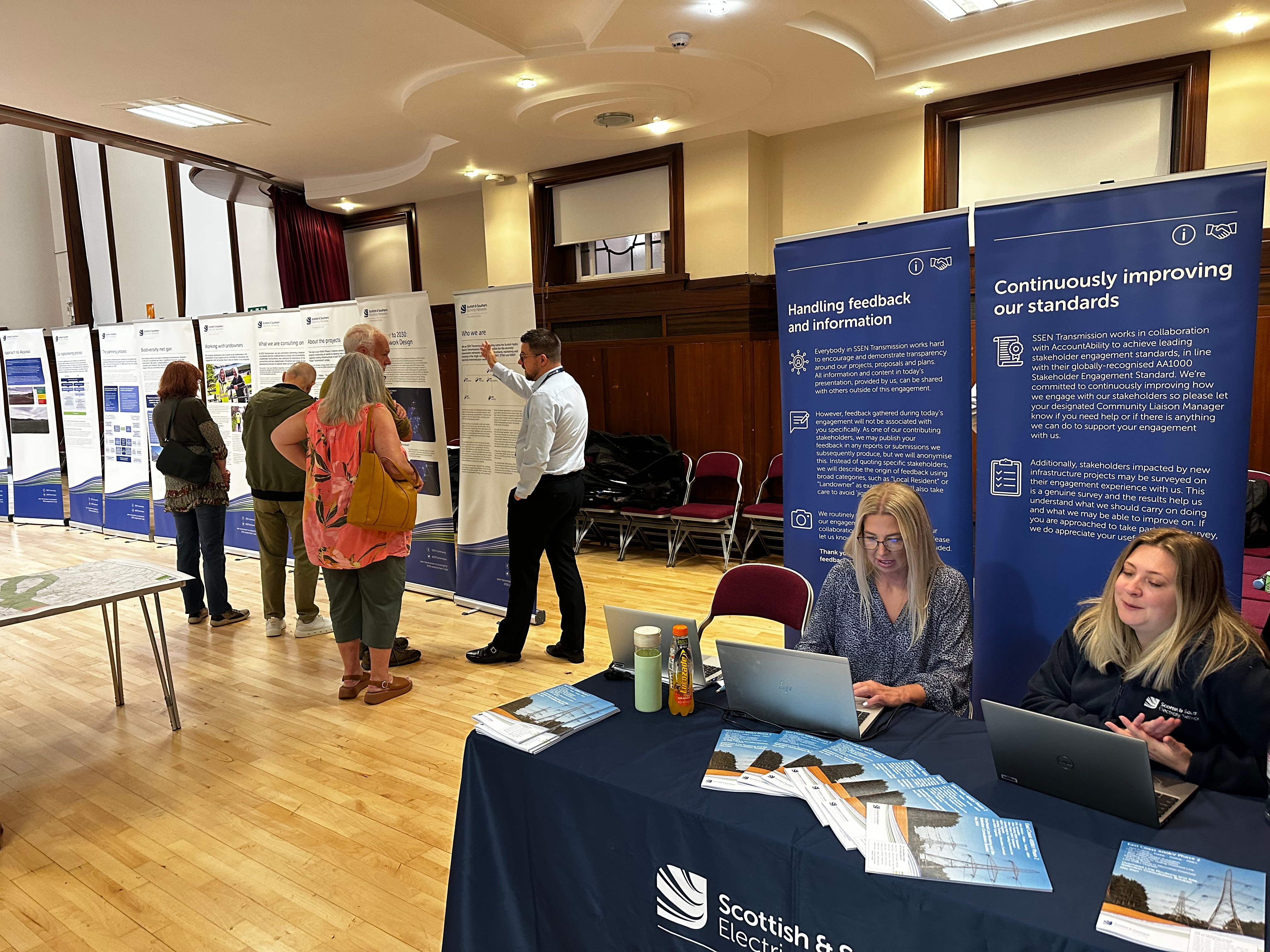
We would like to thank all local community members and stakeholders who took the time to attend our recent May 2023 consultation events which took place between 2-11 May, with 6 in-person consultations between Kirkton of Skene and Tealing, and a virtual live instant messaging session on 17 May.
Our public consultation will remain open until 23 June, and we would welcome all interested parties to submit their views regarding the proposals presented during consultation. Once the consultation period closes all feedback will be assessed and considered, to help determine next steps required ahead of route determination.
Our virtual consultation portal will remain available throughout the consultation period via the following link. The portal contains links to download the consultation booklet and copies of the maps, however these are also available to download via the 'Project Documents' section on the left hand side of this page.
May 2023 consultation feedback
We would like to thank all local community members and stakeholders who took the time to attend our recent May 2023 consultation events which took place between 2-11 May, with 6 in-person consultations between Kirkton of Skene and Tealing, and a virtual live instant messaging session on 17 May.
Our public consultation will remain open until 23 June, and we would welcome all interested parties to submit their views regarding the proposals presented during consultation. Once the consultation period closes all feedback will be assessed and considered, to help determine next steps required ahead of route determination.
Our virtual consultation portal will remain available throughout the consultation period via the following link. The portal contains links to download the consultation booklet and copies of the maps, however these are also available to download via the 'Project Documents' section on the left hand side of this page. -
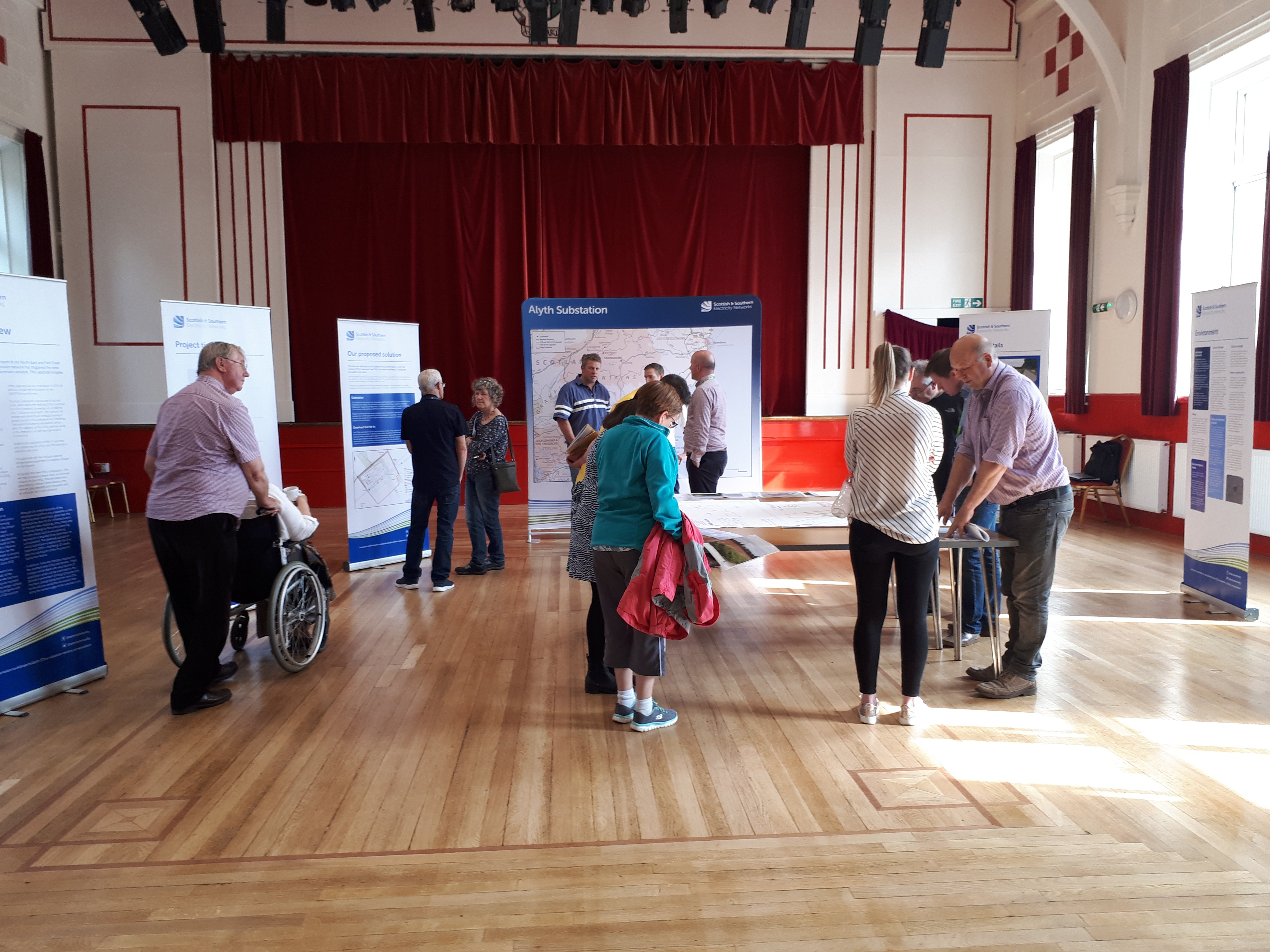
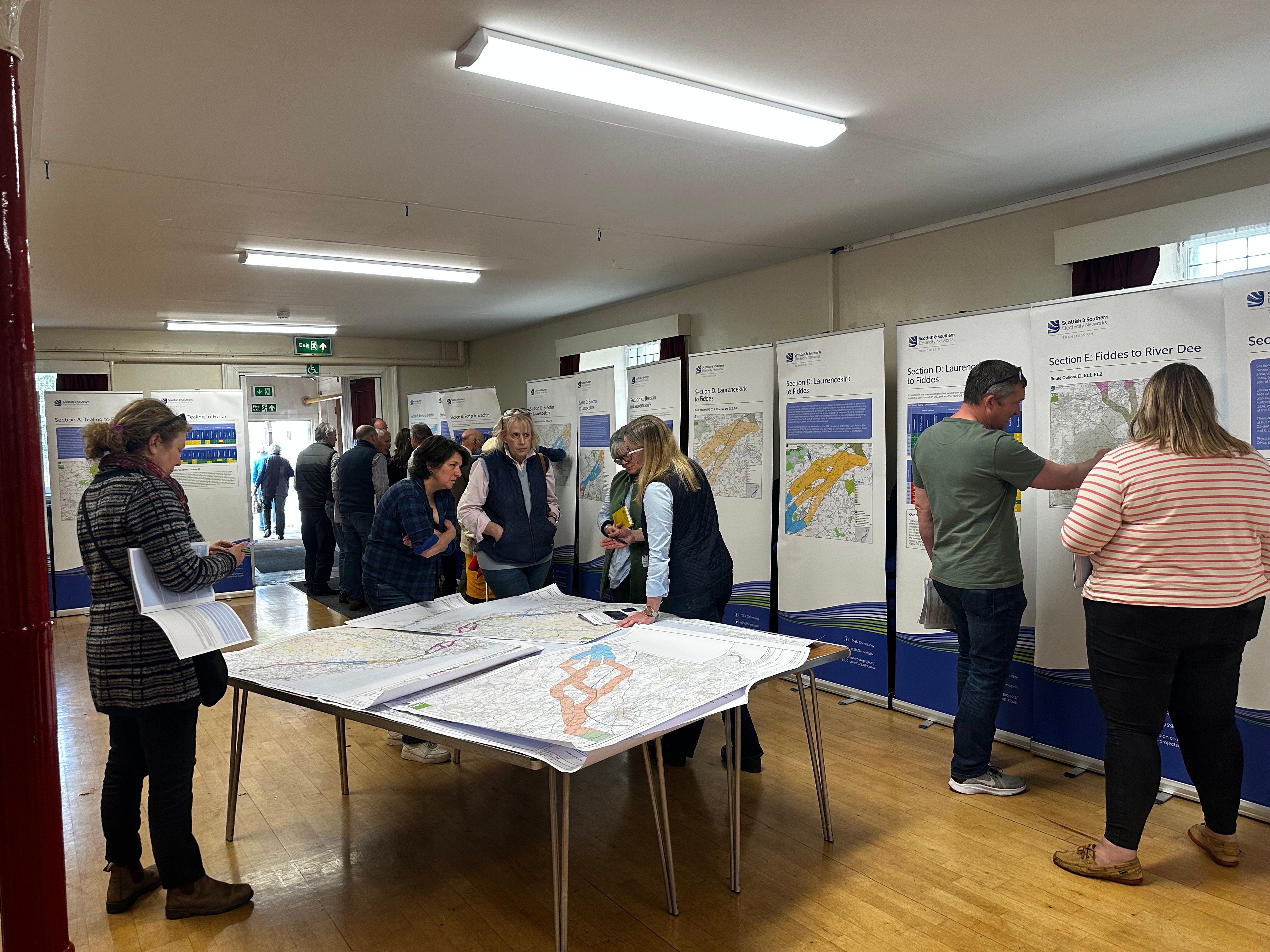
Public consultation events - May 2023
We are pleased to be hosting both face to face public consultations along with a virtual online consultation exhibition to gain views and feedback on our proposals for the East Coast 400kV phase 2 scheme, which the Alyth - Tealing overhead line re-conductor project is part of.
We would encourage members of the local communities and all interested parties to attend the events, meet the proejct team and and give their views and provide feedback. The face to face consultations will be held at the following locations:
2 May at Milne Hall, Kirkton of Skene between 2-7pm
3 May at Ardoe House Hotel in the Ogston Suite between 2-7pm
4 May at Dickson Hall, Laurencekirk between 2-7pm
9 May at Brechin City Hall, Brechin between 2-7pm
10 May at Westmuir Hall, Kirriemuir between 2-7pm
11 May at Tealing Village Hall, Tealing between 2-7pmThe virtual consultation event will be taking place on:
17 May between 4-6pm
Click here to enter our virtual consultation room
Should you have any questions regarding the consultations please contact the projects Community Liaison Manager.
Public consultation events - May 2023
We are pleased to be hosting both face to face public consultations along with a virtual online consultation exhibition to gain views and feedback on our proposals for the East Coast 400kV phase 2 scheme, which the Tealing - Westfield overhead line re-conductor project is part of.
We would encourage members of the local communities and all interested parties to attend the events, meet the proejct team and and give their views and provide feedback. The face to face consultations will be held at the following locations:
2 May at Milne Hall, Kirkton of Skene between 2-7pm
3 May at Ardoe House Hotel in the Ogston Suite between 2-7pm
4 May at Dickson Hall, Laurencekirk between 2-7pm
9 May at Brechin City Hall, Brechin between 2-7pm
10 May at Westmuir Hall, Kirriemuir between 2-7pm
11 May at Tealing Village Hall, Tealing between 2-7pmThe virtual consultation event will be taking place on:
17 May between 4-6pm
Click here to access our virtual consultation room
Should you have any questions regarding the consultations please contact the projects Community Liaison Manager.
-
2023 public consultations
We are intending on launching initial public consultation events in quarter 2 of 2023 to share our approach to develop this project and the rationale behind our proposals. We are keen to hear our stakeholders views regarding our preferred technology options and if there are further considerations you believe need to be taken into account during the next stage of the development process.
Drop-in events will be arranged at various locations and times between Alyth and Tealing where we will welcome all interested parties to come meet our project development team, learn more about the project, ask any questions and share your feedback. Information on the consultation dates and locations will be shared in the New Year.
In the meantime to learn more about the project an information booklet is availabe to be downloaded from the project documents section of this website and to hear from our Senior Development Project Manager Calum describe the approach we are taking to develop our proposals and the opportunities that will be available for stakeholders to feed in to the design process please view our short video here.2023 public consultations
We are intending on launching initial public consultation events in quarter 2 of 2023 to share our approach to develop this project and the rationale behind our proposals. We are keen to hear our stakeholders views regarding our preferred technology options and if there are further considerations you believe need to be taken into account during the next stage of the development process.
Drop-in events will be arranged at various locations and times between Tealing, Westfield and the Glenrothes area where we will welcome all interested parties to come meet our project development team, learn more about the project, ask any questions and share your feedback. Information on the consultation dates and locations will be shared in the New Year.
In the meantime to learn more about the project an information booklet is availabe to be downloaded from the project documents section of this website and to hear from our Senior Development Project Manager Calum describe the approach we are taking to develop our proposals and the opportunities that will be available for stakeholders to feed in to the design process please view our short video here.
Documents
Alyth - Tealing Overhead Line 400kV Upgrade - Planning Application
Planning Application - S37 Notice of Decision
-
S37 Notice of Decision
- Type:
- Date:
- 21 October 2025
- Size:
- 116.6 KB
This document details the notice of decision for our S37 planning application in regards to the upgrading of approximately 14km of the existing 16km 275kV overhead line to enable operation at 400kV, located between Alyth substation and Tealing substation within the planning authority areas of Angus Council and Perth and Kinross Council.
Planning Application - Covering Letter
-
Covering Letter
- Type:
- Date:
- 07 December 2024
- Size:
- 127.7 KB
This document is the covering letter to Scottish Ministers that accompanied the planning application for the proposed OHL upgrade.
Planning Application - EIA Report Volume 1: Non Technical Summary
-
EIAR Volume 1 - Non-Technical Summary
- Type:
- Date:
- 07 December 2024
- Size:
- 2.2 MB
This is the Non-Technical Summary which will describe the Proposed Development and the likely significant effects predicted in a concise, non-technical manner.
Planning Application - EIA Report Volume 2: Main Report
-
EIAR Volume 2 - Abbreviations and Preface
- Type:
- Date:
- 07 December 2024
- Size:
- 152.9 KB
-
EIAR Volume 2 - Chapter 1 - Introduction and Background
- Type:
- Date:
- 07 December 2024
- Size:
- 172 KB
Documents within Volume 2 of the EIA provides an introduction to the Proposed Development, setting out the need for the project. It details the key components of the Proposed Development, including access requirements. Volume 2 also details the approach and methodology of the EIA Report, and consultations that have been conducted to define the scope of the EIA.
-
EIAR Volume 2 - Chapter 10 - Cultural Heritage
- Type:
- Date:
- 07 December 2024
- Size:
- 409.2 KB
Documents within Volume 2 of the EIA provides an introduction to the Proposed Development, setting out the need for the project. It details the key components of the Proposed Development, including access requirements. Volume 2 also details the approach and methodology of the EIA Report, and consultations that have been conducted to define the scope of the EIA.
-
EIAR Volume 2 - Chapter 11 -Traffic and Transport
- Type:
- Date:
- 07 December 2024
- Size:
- 289.9 KB
Documents within Volume 2 of the EIA provides an introduction to the Proposed Development, setting out the need for the project. It details the key components of the Proposed Development, including access requirements. Volume 2 also details the approach and methodology of the EIA Report, and consultations that have been conducted to define the scope of the EIA.
-
EIAR Volume 2 - Chapter 12 - Hydrology, Hydrogeology and Soils
- Type:
- Date:
- 07 December 2024
- Size:
- 2.2 MB
Documents within Volume 2 of the EIA provides an introduction to the Proposed Development, setting out the need for the project. It details the key components of the Proposed Development, including access requirements. Volume 2 also details the approach and methodology of the EIA Report, and consultations that have been conducted to define the scope of the EIA.
-
EIAR Volume 2 - Chapter 13 - Noise and Vibration
- Type:
- Date:
- 07 December 2024
- Size:
- 397.2 KB
Documents within Volume 2 of the EIA provides an introduction to the Proposed Development, setting out the need for the project. It details the key components of the Proposed Development, including access requirements. Volume 2 also details the approach and methodology of the EIA Report, and consultations that have been conducted to define the scope of the EIA.
-
EIAR Volume 2 - Chapter 14 - Cumulative Effects
- Type:
- Date:
- 07 December 2024
- Size:
- 330.3 KB
Documents within Volume 2 of the EIA provides an introduction to the Proposed Development, setting out the need for the project. It details the key components of the Proposed Development, including access requirements. Volume 2 also details the approach and methodology of the EIA Report, and consultations that have been conducted to define the scope of the EIA.
-
EIAR Volume 2 - Chapter 15 - Summary of Effects
- Type:
- Date:
- 07 December 2024
- Size:
- 202.9 KB
Documents within Volume 2 of the EIA provides an introduction to the Proposed Development, setting out the need for the project. It details the key components of the Proposed Development, including access requirements. Volume 2 also details the approach and methodology of the EIA Report, and consultations that have been conducted to define the scope of the EIA.
-
EIAR Volume 2 - Chapter 16 - Schedule of Environmental Commitments
- Type:
- Date:
- 07 December 2024
- Size:
- 198.4 KB
Documents within Volume 2 of the EIA provides an introduction to the Proposed Development, setting out the need for the project. It details the key components of the Proposed Development, including access requirements. Volume 2 also details the approach and methodology of the EIA Report, and consultations that have been conducted to define the scope of the EIA.
-
EIAR Volume 2 - Chapter 2 - Project Need and Strategy
- Type:
- Date:
- 07 December 2024
- Size:
- 155.8 KB
Documents within Volume 2 of the EIA provides an introduction to the Proposed Development, setting out the need for the project. It details the key components of the Proposed Development, including access requirements. Volume 2 also details the approach and methodology of the EIA Report, and consultations that have been conducted to define the scope of the EIA.
-
EIAR Volume 2 - Chapter 3 - Project Description
- Type:
- Date:
- 07 December 2024
- Size:
- 543 KB
Documents within Volume 2 of the EIA provides an introduction to the Proposed Development, setting out the need for the project. It details the key components of the Proposed Development, including access requirements. Volume 2 also details the approach and methodology of the EIA Report, and consultations that have been conducted to define the scope of the EIA.
-
EIAR Volume 2 - Chapter 4 - Alternatives Considered
- Type:
- Date:
- 07 December 2024
- Size:
- 157.6 KB
Documents within Volume 2 of the EIA provides an introduction to the Proposed Development, setting out the need for the project. It details the key components of the Proposed Development, including access requirements. Volume 2 also details the approach and methodology of the EIA Report, and consultations that have been conducted to define the scope of the EIA.
-
EIAR Volume 2 - Chapter 5 - EIA Approach and Methodology
- Type:
- Date:
- 07 December 2024
- Size:
- 303.2 KB
Documents within Volume 2 of the EIA provides an introduction to the Proposed Development, setting out the need for the project. It details the key components of the Proposed Development, including access requirements. Volume 2 also details the approach and methodology of the EIA Report, and consultations that have been conducted to define the scope of the EIA.
-
EIAR Volume 2 - Chapter 6 - Scope and Consultation
- Type:
- Date:
- 07 December 2024
- Size:
- 250.3 KB
Documents within Volume 2 of the EIA provides an introduction to the Proposed Development, setting out the need for the project. It details the key components of the Proposed Development, including access requirements. Volume 2 also details the approach and methodology of the EIA Report, and consultations that have been conducted to define the scope of the EIA.
-
EIAR Volume 2 - Chapter 7 - Ecology
- Type:
- Date:
- 07 December 2024
- Size:
- 751.7 KB
Documents within Volume 2 of the EIA provides an introduction to the Proposed Development, setting out the need for the project. It details the key components of the Proposed Development, including access requirements. Volume 2 also details the approach and methodology of the EIA Report, and consultations that have been conducted to define the scope of the EIA.
-
EIAR Volume 2 - Chapter 8 - Ornithology
- Type:
- Date:
- 07 December 2024
- Size:
- 348.9 KB
Documents within Volume 2 of the EIA provides an introduction to the Proposed Development, setting out the need for the project. It details the key components of the Proposed Development, including access requirements. Volume 2 also details the approach and methodology of the EIA Report, and consultations that have been conducted to define the scope of the EIA.
-
EIAR Volume 2 - Chapter 9 - Forestry
- Type:
- Date:
- 07 December 2024
- Size:
- 230.8 KB
Documents within Volume 2 of the EIA provides an introduction to the Proposed Development, setting out the need for the project. It details the key components of the Proposed Development, including access requirements. Volume 2 also details the approach and methodology of the EIA Report, and consultations that have been conducted to define the scope of the EIA.
Planning Application - EIA Report Volume 3: Figures and Visualisations
-
EIAR Volume 3 - Figure 1.1 - Location Plan
- Type:
- Date:
- 07 December 2024
- Size:
- 2.7 MB
Documents within Volume 3 contains supporting figures referred to in Volumes 1 and 2 of the EIA Report.
-
EIAR Volume 3 - Figure 10.1 - Heritage Assets within 250m Study Area adopted for baseline study
- Type:
- Date:
- 07 December 2024
- Size:
- 6.2 MB
Documents within Volume 3 contains supporting figures referred to in Volumes 1 and 2 of the EIA Report.
-
EIAR Volume 3 - Figure 11.1 - Study Area Roads
- Type:
- Date:
- 07 December 2024
- Size:
- 3.4 MB
Documents within Volume 3 contains supporting figures referred to in Volumes 1 and 2 of the EIA Report.
-
EIAR Volume 3 - Figure 11.2 - Traffic Survey Locations
- Type:
- Date:
- 07 December 2024
- Size:
- 3.3 MB
Documents within Volume 3 contains supporting figures referred to in Volumes 1 and 2 of the EIA Report.
-
EIAR Volume 3 - Figure 12.1 - Surface Water Receptors
- Type:
- Date:
- 07 December 2024
- Size:
- 3.4 MB
Documents within Volume 3 contains supporting figures referred to in Volumes 1 and 2 of the EIA Report.
-
EIAR Volume 3 - Figure 12.2 - Ground Water Receptors
- Type:
- Date:
- 07 December 2024
- Size:
- 3.3 MB
Documents within Volume 3 contains supporting figures referred to in Volumes 1 and 2 of the EIA Report.
-
EIAR Volume 3 - Figure 12.3 - Carbon and Peatland Map
- Type:
- Date:
- 07 December 2024
- Size:
- 3.5 MB
Documents within Volume 3 contains supporting figures referred to in Volumes 1 and 2 of the EIA Report.
-
EIAR Volume 3 - Figure 3.1 - Overview of the Proposed Development (2)
- Type:
- Date:
- 07 December 2024
- Size:
- 2.5 MB
Documents within Volume 3 contains supporting figures referred to in Volumes 1 and 2 of the EIA Report.
-
EIAR Volume 3 - Figure 5.1 - Cumulative Developments
- Type:
- Date:
- 07 December 2024
- Size:
- 3.3 MB
Documents within Volume 3 contains supporting figures referred to in Volumes 1 and 2 of the EIA Report.
-
EIAR Volume 3 - Figure 7.1a - Natural Heritage Future Zone 16
- Type:
- Date:
- 07 December 2024
- Size:
- 3.4 MB
Documents within Volume 3 contains supporting figures referred to in Volumes 1 and 2 of the EIA Report.
-
EIAR Volume 3 - Figure 7.1b - Statutory Designated Sites
- Type:
- Date:
- 07 December 2024
- Size:
- 1.9 MB
Documents within Volume 3 contains supporting figures referred to in Volumes 1 and 2 of the EIA Report.
-
EIAR Volume 3 - Figure 7.1c - Non-Statutory Designated Sites
- Type:
- Date:
- 07 December 2024
- Size:
- 2.9 MB
Documents within Volume 3 contains supporting figures referred to in Volumes 1 and 2 of the EIA Report.
-
EIAR Volume 3 - Figure 7.1d - Habitat Survey Results
- Type:
- Date:
- 07 December 2024
- Size:
- 4.1 MB
Documents within Volume 3 contains supporting figures referred to in Volumes 1 and 2 of the EIA Report.
-
EIAR Volume 3 - Figure 7.1e - SBL Priority and Annex I Habitats
- Type:
- Date:
- 07 December 2024
- Size:
- 4.1 MB
Documents within Volume 3 contains supporting figures referred to in Volumes 1 and 2 of the EIA Report.
-
EIAR Volume 3 - Figure 8.1 - Eastern Lowlands Natural Heritage Zone (NHZ)
- Type:
- Date:
- 07 December 2024
- Size:
- 4.3 MB
Documents within Volume 3 contains supporting figures referred to in Volumes 1 and 2 of the EIA Report.
-
EIAR Volume 3 - Figure 8.2 - Statutory Designated Sites for the Conservation of Birds
- Type:
- Date:
- 07 December 2024
- Size:
- 3.1 MB
Documents within Volume 3 contains supporting figures referred to in Volumes 1 and 2 of the EIA Report.
-
EIAR Volume 3 - Figure 8.3 - Field Survey Results
- Type:
- Date:
- 07 December 2024
- Size:
- 10.2 MB
Documents within Volume 3 contains supporting figures referred to in Volumes 1 and 2 of the EIA Report.
Planning Application - EIA Report Volume 4: Appendices
-
EIAR Volume 4 - Appendix 10.1 Gazetteers
- Type:
- Date:
- 07 December 2024
- Size:
- 170.3 KB
Documents within Volume 4 comprises supporting appendices to Volume 2 of the EIA Report. Appendices include a Schedule of Mitigation and further detailed reporting or information to support the EIA Report and technical assessments contained therein.
-
EIAR Volume 4 - Appendix 10.2 Site Photos
- Type:
- Date:
- 07 December 2024
- Size:
- 2.5 MB
Documents within Volume 4 comprises supporting appendices to Volume 2 of the EIA Report. Appendices include a Schedule of Mitigation and further detailed reporting or information to support the EIA Report and technical assessments contained therein.
-
EIAR Volume 4 - Appendix 11.1 - Transport Assessment Report
- Type:
- Date:
- 07 December 2024
- Size:
- 1.5 MB
Documents within Volume 4 comprises supporting appendices to Volume 2 of the EIA Report. Appendices include a Schedule of Mitigation and further detailed reporting or information to support the EIA Report and technical assessments contained therein.
-
EIAR Volume 4 - Appendix 12.1 - PWS Assessment
- Type:
- Date:
- 07 December 2024
- Size:
- 174.2 KB
Documents within Volume 4 comprises supporting appendices to Volume 2 of the EIA Report. Appendices include a Schedule of Mitigation and further detailed reporting or information to support the EIA Report and technical assessments contained therein.
-
EIAR Volume 4 - Appendix 12.2 - Site Walkover Photos
- Type:
- Date:
- 07 December 2024
- Size:
- 2.2 MB
Documents within Volume 4 comprises supporting appendices to Volume 2 of the EIA Report. Appendices include a Schedule of Mitigation and further detailed reporting or information to support the EIA Report and technical assessments contained therein.
-
EIAR Volume 4 - Appendix 13.1 - Acoustic Terminology
- Type:
- Date:
- 07 December 2024
- Size:
- 130.6 KB
Documents within Volume 4 comprises supporting appendices to Volume 2 of the EIA Report. Appendices include a Schedule of Mitigation and further detailed reporting or information to support the EIA Report and technical assessments contained therein.
-
EIAR Volume 4 - Appendix 13.2 - Calibration Certificates
- Type:
- Date:
- 07 December 2024
- Size:
- 477.5 KB
Documents within Volume 4 comprises supporting appendices to Volume 2 of the EIA Report. Appendices include a Schedule of Mitigation and further detailed reporting or information to support the EIA Report and technical assessments contained therein.
-
EIAR Volume 4 - Appendix 13.3 - NSRs
- Type:
- Date:
- 07 December 2024
- Size:
- 128.3 KB
Documents within Volume 4 comprises supporting appendices to Volume 2 of the EIA Report. Appendices include a Schedule of Mitigation and further detailed reporting or information to support the EIA Report and technical assessments contained therein.
-
EIAR Volume 4 - Appendix 13.4 - Construction Activity
- Type:
- Date:
- 07 December 2024
- Size:
- 135.8 KB
Documents within Volume 4 comprises supporting appendices to Volume 2 of the EIA Report. Appendices include a Schedule of Mitigation and further detailed reporting or information to support the EIA Report and technical assessments contained therein.
-
EIAR Volume 4 - Appendix 13.5 - Construction Noise Impact Assessment
- Type:
- Date:
- 07 December 2024
- Size:
- 213.3 KB
Documents within Volume 4 comprises supporting appendices to Volume 2 of the EIA Report. Appendices include a Schedule of Mitigation and further detailed reporting or information to support the EIA Report and technical assessments contained therein.
-
EIAR Volume 4 - Appendix 13.6 - Operational Noise Impact Assessment
- Type:
- Date:
- 07 December 2024
- Size:
- 148.4 KB
Documents within Volume 4 comprises supporting appendices to Volume 2 of the EIA Report. Appendices include a Schedule of Mitigation and further detailed reporting or information to support the EIA Report and technical assessments contained therein.
-
EIAR Volume 4 - Appendix 13.7 - Cumulative Operational NIA
- Type:
- Date:
- 07 December 2024
- Size:
- 123.9 KB
Documents within Volume 4 comprises supporting appendices to Volume 2 of the EIA Report. Appendices include a Schedule of Mitigation and further detailed reporting or information to support the EIA Report and technical assessments contained therein.
-
EIAR Volume 4 - Appendix 5.1 - EIA Team
- Type:
- Date:
- 07 December 2024
- Size:
- 135.5 KB
Documents within Volume 4 comprises supporting appendices to Volume 2 of the EIA Report. Appendices include a Schedule of Mitigation and further detailed reporting or information to support the EIA Report and technical assessments contained therein.
-
EIAR Volume 4 - Appendix 6.1 - Scoping Matrix
- Type:
- Date:
- 07 December 2024
- Size:
- 376.2 KB
Documents within Volume 4 comprises supporting appendices to Volume 2 of the EIA Report. Appendices include a Schedule of Mitigation and further detailed reporting or information to support the EIA Report and technical assessments contained therein.
-
EIAR Volume 4 - Appendix 6.2 - Scoping Opinion
- Type:
- Date:
- 07 December 2024
- Size:
- 2.7 MB
Documents within Volume 4 comprises supporting appendices to Volume 2 of the EIA Report. Appendices include a Schedule of Mitigation and further detailed reporting or information to support the EIA Report and technical assessments contained therein.
-
EIAR Volume 4 - Appendix 6.3 - Gate Check Report
- Type:
- Date:
- 07 December 2024
- Size:
- 1.7 MB
Documents within Volume 4 comprises supporting appendices to Volume 2 of the EIA Report. Appendices include a Schedule of Mitigation and further detailed reporting or information to support the EIA Report and technical assessments contained therein.
-
EIAR Volume 4 - Appendix 7.1 - Legislation and Policy
- Type:
- Date:
- 07 December 2024
- Size:
- 172.6 KB
Documents within Volume 4 comprises supporting appendices to Volume 2 of the EIA Report. Appendices include a Schedule of Mitigation and further detailed reporting or information to support the EIA Report and technical assessments contained therein.
-
EIAR Volume 4 - Appendix 7.4 - HRA
- Type:
- Date:
- 07 December 2024
- Size:
- 2.8 MB
Documents within Volume 4 comprises supporting appendices to Volume 2 of the EIA Report. Appendices include a Schedule of Mitigation and further detailed reporting or information to support the EIA Report and technical assessments contained therein.
-
EIAR Volume 4 - Appendix 7.5 - MD-SEDD Checklist
- Type:
- Date:
- 07 December 2024
- Size:
- 137.6 KB
Documents within Volume 4 comprises supporting appendices to Volume 2 of the EIA Report. Appendices include a Schedule of Mitigation and further detailed reporting or information to support the EIA Report and technical assessments contained therein.
-
EIAR Volume 4 - Appendix 7.6 - BNG Report
- Type:
- Date:
- 07 December 2024
- Size:
- 24.7 MB
Documents within Volume 4 comprises supporting appendices to Volume 2 of the EIA Report. Appendices include a Schedule of Mitigation and further detailed reporting or information to support the EIA Report and technical assessments contained therein.
Planning Application - Pre Application Consultation (PAC) Report
-
PAC Report_Part1
- Type:
- Date:
- 07 December 2024
- Size:
- 3.7 MB
This document provides an overview of the consultation programme and describes: the findings from the PAC process; the steps taken to meet statutory requirements; the feedback received during the PAC process, and how we responded.
-
PAC Report_Part2
- Type:
- Date:
- 07 December 2024
- Size:
- 7.1 MB
This document provides the appendices for the PAC report to provide evidence of consultation and publicity carried out.
Planning Application - Planning Statement
-
Planning Statement
- Type:
- Date:
- 07 December 2024
- Size:
- 1.2 MB
This Planning Statement considers the case for approval in land use planning policy terms at the national (National Planning Framework 4 (NPF4)) and local (Perth and Kinross Council (PKC) and Angus Council) level, with reference to the statutory Development Plan and national planning and energy policy, all of which support the delivery of electricity infrastructure that will assist in the delivery of the Government’s legally binding ‘Net Zero’ commitments and which will ensure security of supply to customers.
Planning Application - Socio Economic Assessment
-
Socio-Economic Assessment
- Type:
- Date:
- 07 December 2024
- Size:
- 4 MB
This document prepared by BiGGAR Economics assess the potential economic impacts from the development and construction of the Proposed Development.
Planning Application - EMF Study
-
EMF Study
- Type:
- Date:
- 09 December 2024
- Size:
- 164.5 MB
The purpose of this study is to present the magnitude of the Electric and Magnetic Fields (EMF) associated with the planned upgrade for the overhead line in question for a transposed line.
Planning Application - Public Notice
-
Newspaper Notice
- Type:
- Date:
- 10 December 2024
- Size:
- 21.3 KB
This is the newspaper notice published in the public notices section of The Edinburgh Gazette, The Courier and The Perthshire Advertiser.
Tealing - Westfield Overhead Line 400kV Upgrade - Planning Application
Planning Application -S37 Notice of Decision
-
S37 Notice of Decision
- Type:
- Date:
- 17 November 2025
- Size:
- 82.1 KB
This document details the notice of decision for our S37 planning application in regards to the upgrading of approximately 37km of the existing 275kV overhead line to enable operation at 400kV, located between the existing Tealing substation and the licence boundary shared with Scottish Power Energy Networks south of Newburgh.
Planning Application - Covering Letter
-
Covering Letter
- Type:
- Date:
- 07 December 2024
- Size:
- 148.7 KB
This document is the covering letter to Scottish Ministers that accompanied the planning application for the proposed OHL upgrade.
Planning Application - EIA Report Volume 4: Appendices
-
EIAR - Volume 4 - Appendix 11.1 - Gazetteers
- Type:
- Date:
- 07 December 2024
- Size:
- 438.9 KB
Documents within Volume 4 comprises supporting appendices to Volume 2 of the EIA Report. Appendices include a Schedule of Mitigation and further detailed reporting or information to support the EIA Report and technical assessments contained therein.
-
EIAR - Volume 4 - Appendix 11.2 - Site Photos
- Type:
- Date:
- 07 December 2024
- Size:
- 5.4 MB
Documents within Volume 4 comprises supporting appendices to Volume 2 of the EIA Report. Appendices include a Schedule of Mitigation and further detailed reporting or information to support the EIA Report and technical assessments contained therein.
-
EIAR - Volume 4 - Appendix 12.1 - Traffic and Movement
- Type:
- Date:
- 07 December 2024
- Size:
- 2.3 MB
Documents within Volume 4 comprises supporting appendices to Volume 2 of the EIA Report. Appendices include a Schedule of Mitigation and further detailed reporting or information to support the EIA Report and technical assessments contained therein.
-
EIAR - Volume 4 - Appendix 13.3 - Site Photos
- Type:
- Date:
- 07 December 2024
- Size:
- 1.7 MB
Documents within Volume 4 comprises supporting appendices to Volume 2 of the EIA Report. Appendices include a Schedule of Mitigation and further detailed reporting or information to support the EIA Report and technical assessments contained therein.
-
EIAR - Volume 4 - Appendix 13.4 - PWS Assessment
- Type:
- Date:
- 07 December 2024
- Size:
- 368.2 KB
Documents within Volume 4 comprises supporting appendices to Volume 2 of the EIA Report. Appendices include a Schedule of Mitigation and further detailed reporting or information to support the EIA Report and technical assessments contained therein.
-
EIAR - Volume 4 - Appendix 13.5 - PDSA
- Type:
- Date:
- 07 December 2024
- Size:
- 398.7 KB
Documents within Volume 4 comprises supporting appendices to Volume 2 of the EIA Report. Appendices include a Schedule of Mitigation and further detailed reporting or information to support the EIA Report and technical assessments contained therein.
-
EIAR - Volume 4 - Appendix 14.1 - Acoustic Terminology
- Type:
- Date:
- 07 December 2024
- Size:
- 273.2 KB
Documents within Volume 4 comprises supporting appendices to Volume 2 of the EIA Report. Appendices include a Schedule of Mitigation and further detailed reporting or information to support the EIA Report and technical assessments contained therein.
-
EIAR - Volume 4 - Appendix 14.2 - Calibration Certificates.
- Type:
- Date:
- 07 December 2024
- Size:
- 532.6 KB
Documents within Volume 4 comprises supporting appendices to Volume 2 of the EIA Report. Appendices include a Schedule of Mitigation and further detailed reporting or information to support the EIA Report and technical assessments contained therein.
-
EIAR - Volume 4 - Appendix 14.3 - NSRs
- Type:
- Date:
- 07 December 2024
- Size:
- 395.6 KB
Documents within Volume 4 comprises supporting appendices to Volume 2 of the EIA Report. Appendices include a Schedule of Mitigation and further detailed reporting or information to support the EIA Report and technical assessments contained therein.
-
EIAR - Volume 4 - Appendix 14.4 - Construction Activity
- Type:
- Date:
- 07 December 2024
- Size:
- 183 KB
Documents within Volume 4 comprises supporting appendices to Volume 2 of the EIA Report. Appendices include a Schedule of Mitigation and further detailed reporting or information to support the EIA Report and technical assessments contained therein.
-
EIAR - Volume 4 - Appendix 5.1 - EIA Team
- Type:
- Date:
- 07 December 2024
- Size:
- 169 KB
Documents within Volume 4 comprises supporting appendices to Volume 2 of the EIA Report. Appendices include a Schedule of Mitigation and further detailed reporting or information to support the EIA Report and technical assessments contained therein.
-
EIAR - Volume 4 - Appendix 6.1 - Scoping Matrix
- Type:
- Date:
- 07 December 2024
- Size:
- 234.3 KB
Documents within Volume 4 comprises supporting appendices to Volume 2 of the EIA Report. Appendices include a Schedule of Mitigation and further detailed reporting or information to support the EIA Report and technical assessments contained therein.
-
EIAR - Volume 4 - Appendix 6.2 - Scoping Opinion
- Type:
- Date:
- 07 December 2024
- Size:
- 4 MB
Documents within Volume 4 comprises supporting appendices to Volume 2 of the EIA Report. Appendices include a Schedule of Mitigation and further detailed reporting or information to support the EIA Report and technical assessments contained therein.
-
EIAR - Volume 4 - Appendix 6.3 - Gate Check Report
- Type:
- Date:
- 07 December 2024
- Size:
- 1.5 MB
Documents within Volume 4 comprises supporting appendices to Volume 2 of the EIA Report. Appendices include a Schedule of Mitigation and further detailed reporting or information to support the EIA Report and technical assessments contained therein.
-
EIAR - Volume 4 - Appendix 8.1 - Legislation and Policy
- Type:
- Date:
- 07 December 2024
- Size:
- 282.5 KB
Documents within Volume 4 comprises supporting appendices to Volume 2 of the EIA Report. Appendices include a Schedule of Mitigation and further detailed reporting or information to support the EIA Report and technical assessments contained therein.
-
EIAR - Volume 4 - Appendix 8.5 - HRA
- Type:
- Date:
- 07 December 2024
- Size:
- 3.1 MB
Documents within Volume 4 comprises supporting appendices to Volume 2 of the EIA Report. Appendices include a Schedule of Mitigation and further detailed reporting or information to support the EIA Report and technical assessments contained therein.
-
EIAR - Volume 4 - Appendix 8.6 - MD-SEDD Checklist
- Type:
- Date:
- 07 December 2024
- Size:
- 306.8 KB
Documents within Volume 4 comprises supporting appendices to Volume 2 of the EIA Report. Appendices include a Schedule of Mitigation and further detailed reporting or information to support the EIA Report and technical assessments contained therein.
-
EIAR - Volume 4 - Appendix 8.7 - BNG
- Type:
- Date:
- 07 December 2024
- Size:
- 9.7 MB
Documents within Volume 4 comprises supporting appendices to Volume 2 of the EIA Report. Appendices include a Schedule of Mitigation and further detailed reporting or information to support the EIA Report and technical assessments contained therein.
-
EIAR - VOLUME 4: Appendix 13.1 – Groundwater WFD Classifications
- Type:
- Date:
- 07 December 2024
- Size:
- 527.9 KB
Documents within Volume 4 comprises supporting appendices to Volume 2 of the EIA Report. Appendices include a Schedule of Mitigation and further detailed reporting or information to support the EIA Report and technical assessments contained therein.
-
EIAR - VOLUME 4: Appendix 13.2 – Surface Water Body Classifications
- Type:
- Date:
- 07 December 2024
- Size:
- 573.2 KB
Documents within Volume 4 comprises supporting appendices to Volume 2 of the EIA Report. Appendices include a Schedule of Mitigation and further detailed reporting or information to support the EIA Report and technical assessments contained therein.
-
EIAR - VOLUME 4: Appendix 14.5 - Construction Noise Assessment of 400 KV OHL
- Type:
- Date:
- 07 December 2024
- Size:
- 566.4 KB
Documents within Volume 4 comprises supporting appendices to Volume 2 of the EIA Report. Appendices include a Schedule of Mitigation and further detailed reporting or information to support the EIA Report and technical assessments contained therein.
-
EIAR - Volume 4: Appendix 14.6 - Operational Noise Impact Assessment of 400 KV OHL
- Type:
- Date:
- 07 December 2024
- Size:
- 862.9 KB
Documents within Volume 4 comprises supporting appendices to Volume 2 of the EIA Report. Appendices include a Schedule of Mitigation and further detailed reporting or information to support the EIA Report and technical assessments contained therein.
Planning Application - EIA Report Volume 3: Figures and Visualisations
-
EIAR - Volume 3 - Figure 1.1 - Location Plan
- Type:
- Date:
- 07 December 2024
- Size:
- 1.8 MB
Documents within Volume 3 contains supporting figures referred to in Volumes 1 and 2 of the EIA Report.
-
EIAR - Volume 3 - Figure 10.1 - Dronley Wood Tree Management Proposals
- Type:
- Date:
- 07 December 2024
- Size:
- 711 KB
Documents within Volume 3 contains supporting figures referred to in Volumes 1 and 2 of the EIA Report.
-
EIAR - Volume 3 - Figure 11.1 Heritage Assets within 250m Study Area adopted for baseline study
- Type:
- Date:
- 07 December 2024
- Size:
- 2.6 MB
Documents within Volume 3 contains supporting figures referred to in Volumes 1 and 2 of the EIA Report.
-
EIAR - Volume 3 - Figure 12.1a - Study Area Roads
- Type:
- Date:
- 07 December 2024
- Size:
- 3.5 MB
Documents within Volume 3 contains supporting figures referred to in Volumes 1 and 2 of the EIA Report.
-
EIAR - Volume 3 - Figure 12.1b - Study Area Roads
- Type:
- Date:
- 07 December 2024
- Size:
- 3.5 MB
Documents within Volume 3 contains supporting figures referred to in Volumes 1 and 2 of the EIA Report.
-
EIAR - Volume 3 - Figure 12.2a - Traffic Survey Locations
- Type:
- Date:
- 07 December 2024
- Size:
- 3.4 MB
Documents within Volume 3 contains supporting figures referred to in Volumes 1 and 2 of the EIA Report.
-
EIAR - Volume 3 - Figure 12.2b - Traffic Survey Locations
- Type:
- Date:
- 07 December 2024
- Size:
- 3.4 MB
Documents within Volume 3 contains supporting figures referred to in Volumes 1 and 2 of the EIA Report.
-
EIAR - Volume 3 - Figure 13.1 - Surface Water Receptors
- Type:
- Date:
- 07 December 2024
- Size:
- 2.6 MB
Documents within Volume 3 contains supporting figures referred to in Volumes 1 and 2 of the EIA Report.
-
EIAR - Volume 3 - Figure 13.2 - Ground Water Receptors
- Type:
- Date:
- 07 December 2024
- Size:
- 3.2 MB
Documents within Volume 3 contains supporting figures referred to in Volumes 1 and 2 of the EIA Report.
-
EIAR - Volume 3 - Figure 13.3a - Superficial Geology
- Type:
- Date:
- 07 December 2024
- Size:
- 2 MB
Documents within Volume 3 contains supporting figures referred to in Volumes 1 and 2 of the EIA Report.
-
EIAR - Volume 3 - Figure 13.3b - Bedrock Geology
- Type:
- Date:
- 07 December 2024
- Size:
- 2 MB
Documents within Volume 3 contains supporting figures referred to in Volumes 1 and 2 of the EIA Report.
-
EIAR - Volume 3 - Figure 13.4 - Geology Designated Sites
- Type:
- Date:
- 07 December 2024
- Size:
- 2.1 MB
Documents within Volume 3 contains supporting figures referred to in Volumes 1 and 2 of the EIA Report.
-
EIAR - Volume 3 - Figure 3.1 - Overview of the Proposed Development
- Type:
- Date:
- 07 December 2024
- Size:
- 4 MB
Documents within Volume 3 contains supporting figures referred to in Volumes 1 and 2 of the EIA Report.
-
EIAR - Volume 3 - Figure 5.1 - Cumulative Developments
- Type:
- Date:
- 07 December 2024
- Size:
- 2.3 MB
Documents within Volume 3 contains supporting figures referred to in Volumes 1 and 2 of the EIA Report.
-
EIAR - Volume 3 - Figure 7.1a - Landscape Character Types and Landscape Designations
- Type:
- Date:
- 07 December 2024
- Size:
- 1.8 MB
Documents within Volume 3 contains supporting figures referred to in Volumes 1 and 2 of the EIA Report.
-
EIAR - Volume 3 - Figure 7.1b - Landscape Character Types and Landscape Designations
- Type:
- Date:
- 07 December 2024
- Size:
- 1.7 MB
Documents within Volume 3 contains supporting figures referred to in Volumes 1 and 2 of the EIA Report.
-
EIAR - Volume 3 - Figure 7.1c - Landscape Character Types and Landscape Designations
- Type:
- Date:
- 07 December 2024
- Size:
- 1.5 MB
Documents within Volume 3 contains supporting figures referred to in Volumes 1 and 2 of the EIA Report.
-
EIAR - Volume 3 - Figure 8.1a - Natural Heritage Zone 16
- Type:
- Date:
- 07 December 2024
- Size:
- 3.3 MB
Documents within Volume 3 contains supporting figures referred to in Volumes 1 and 2 of the EIA Report.
-
EIAR - Volume 3 - Figure 8.1b - Statutory Designated Sites for Nature Conservation
- Type:
- Date:
- 07 December 2024
- Size:
- 2.4 MB
Documents within Volume 3 contains supporting figures referred to in Volumes 1 and 2 of the EIA Report.
-
EIAR - Volume 3 - Figure 8.1c - Non-Statutory Designated Sites for Nature Conservation
- Type:
- Date:
- 07 December 2024
- Size:
- 2 MB
Documents within Volume 3 contains supporting figures referred to in Volumes 1 and 2 of the EIA Report.
-
EIAR - Volume 3 - Figure 8.1d - Habitat Survey Results
- Type:
- Date:
- 07 December 2024
- Size:
- 7.6 MB
Documents within Volume 3 contains supporting figures referred to in Volumes 1 and 2 of the EIA Report.
-
EIAR - Volume 3 - Figure 8.1e - SBL Priority and Annex I Habitats
- Type:
- Date:
- 07 December 2024
- Size:
- 7.3 MB
Documents within Volume 3 contains supporting figures referred to in Volumes 1 and 2 of the EIA Report.
-
EIAR - Volume 3 - Figure 8.1f - Ground Water Dependant Terrestrial Ecosystems
- Type:
- Date:
- 07 December 2024
- Size:
- 7.1 MB
Documents within Volume 3 contains supporting figures referred to in Volumes 1 and 2 of the EIA Report.
-
EIAR - Volume 3 - Figure 9.1 - Eastern Lowlands Natural Heritage Zone (NHZ)
- Type:
- Date:
- 07 December 2024
- Size:
- 3.3 MB
Documents within Volume 3 contains supporting figures referred to in Volumes 1 and 2 of the EIA Report.
-
EIAR - Volume 3 - Figure 9.2 - Statutory designated Sites for the Conservation of Birds
- Type:
- Date:
- 07 December 2024
- Size:
- 2.4 MB
Documents within Volume 3 contains supporting figures referred to in Volumes 1 and 2 of the EIA Report.
-
EIAR - Volume 3 - Figure 9.3 - Field Survey Results
- Type:
- Date:
- 07 December 2024
- Size:
- 13.5 MB
Documents within Volume 3 contains supporting figures referred to in Volumes 1 and 2 of the EIA Report.
Planning Application - EIA Report Volume 2: Main Report
-
EIAR - Volume 2 - Chapter 13 - Hydrology, Hydrogeology & Geology
- Type:
- Date:
- 07 December 2024
- Size:
- 1.7 MB
Documents within Volume 2 of the EIA provides an introduction to the Proposed Development, setting out the need for the project. It details the key components of the Proposed Development, including access requirements. Volume 2 also details the approach and methodology of the EIA Report, and consultations that have been conducted to define the scope of the EIA.
-
EIAR - Volume 2 - Chapter 14 - Noise and Vibration
- Type:
- Date:
- 07 December 2024
- Size:
- 588.3 KB
Documents within Volume 2 of the EIA provides an introduction to the Proposed Development, setting out the need for the project. It details the key components of the Proposed Development, including access requirements. Volume 2 also details the approach and methodology of the EIA Report, and consultations that have been conducted to define the scope of the EIA.
-
EIAR - Volume 2 - Abbreviations and Preface
- Type:
- Date:
- 07 December 2024
- Size:
- 299 KB
-
EIAR - Volume 2 - Chapter 1 - Introduction and Background
- Type:
- Date:
- 07 December 2024
- Size:
- 338.2 KB
Documents within Volume 2 of the EIA provides an introduction to the Proposed Development, setting out the need for the project. It details the key components of the Proposed Development, including access requirements. Volume 2 also details the approach and methodology of the EIA Report, and consultations that have been conducted to define the scope of the EIA.
-
EIAR - Volume 2 - Chapter 10 - Forestry
- Type:
- Date:
- 07 December 2024
- Size:
- 393.6 KB
Documents within Volume 2 of the EIA provides an introduction to the Proposed Development, setting out the need for the project. It details the key components of the Proposed Development, including access requirements. Volume 2 also details the approach and methodology of the EIA Report, and consultations that have been conducted to define the scope of the EIA.
-
EIAR - Volume 2 - Chapter 11 - Cultural Heritage
- Type:
- Date:
- 07 December 2024
- Size:
- 593.4 KB
Documents within Volume 2 of the EIA provides an introduction to the Proposed Development, setting out the need for the project. It details the key components of the Proposed Development, including access requirements. Volume 2 also details the approach and methodology of the EIA Report, and consultations that have been conducted to define the scope of the EIA.
-
EIAR - Volume 2 - Chapter 12 - Traffic and Transport
- Type:
- Date:
- 07 December 2024
- Size:
- 612.3 KB
Documents within Volume 2 of the EIA provides an introduction to the Proposed Development, setting out the need for the project. It details the key components of the Proposed Development, including access requirements. Volume 2 also details the approach and methodology of the EIA Report, and consultations that have been conducted to define the scope of the EIA.
-
EIAR - Volume 2 - Chapter 15 - Cumulative Effects
- Type:
- Date:
- 07 December 2024
- Size:
- 439.8 KB
Documents within Volume 2 of the EIA provides an introduction to the Proposed Development, setting out the need for the project. It details the key components of the Proposed Development, including access requirements. Volume 2 also details the approach and methodology of the EIA Report, and consultations that have been conducted to define the scope of the EIA.
-
EIAR - Volume 2 - Chapter 16 - Summary of Effects
- Type:
- Date:
- 07 December 2024
- Size:
- 294.3 KB
Documents within Volume 2 of the EIA provides an introduction to the Proposed Development, setting out the need for the project. It details the key components of the Proposed Development, including access requirements. Volume 2 also details the approach and methodology of the EIA Report, and consultations that have been conducted to define the scope of the EIA.
-
EIAR - Volume 2 - Chapter 17 -Schedule of Environmental Commitments
- Type:
- Date:
- 07 December 2024
- Size:
- 387.8 KB
Documents within Volume 2 of the EIA provides an introduction to the Proposed Development, setting out the need for the project. It details the key components of the Proposed Development, including access requirements. Volume 2 also details the approach and methodology of the EIA Report, and consultations that have been conducted to define the scope of the EIA.
-
EIAR - Volume 2 - Chapter 2 - Project Need and Strategy
- Type:
- Date:
- 07 December 2024
- Size:
- 281.4 KB
Documents within Volume 2 of the EIA provides an introduction to the Proposed Development, setting out the need for the project. It details the key components of the Proposed Development, including access requirements. Volume 2 also details the approach and methodology of the EIA Report, and consultations that have been conducted to define the scope of the EIA.
-
EIAR - Volume 2 - Chapter 3 - Project Description
- Type:
- Date:
- 07 December 2024
- Size:
- 751.6 KB
Documents within Volume 2 of the EIA provides an introduction to the Proposed Development, setting out the need for the project. It details the key components of the Proposed Development, including access requirements. Volume 2 also details the approach and methodology of the EIA Report, and consultations that have been conducted to define the scope of the EIA.
-
EIAR - Volume 2 - Chapter 4 - Alternatives Considered
- Type:
- Date:
- 07 December 2024
- Size:
- 335.4 KB
Documents within Volume 2 of the EIA provides an introduction to the Proposed Development, setting out the need for the project. It details the key components of the Proposed Development, including access requirements. Volume 2 also details the approach and methodology of the EIA Report, and consultations that have been conducted to define the scope of the EIA.
-
EIAR - Volume 2 - Chapter 5 - EIA Approach and Methodology
- Type:
- Date:
- 07 December 2024
- Size:
- 323.1 KB
Documents within Volume 2 of the EIA provides an introduction to the Proposed Development, setting out the need for the project. It details the key components of the Proposed Development, including access requirements. Volume 2 also details the approach and methodology of the EIA Report, and consultations that have been conducted to define the scope of the EIA.
-
EIAR - Volume 2 - Chapter 6 - Scope and Consultation
- Type:
- Date:
- 07 December 2024
- Size:
- 358.4 KB
Documents within Volume 2 of the EIA provides an introduction to the Proposed Development, setting out the need for the project. It details the key components of the Proposed Development, including access requirements. Volume 2 also details the approach and methodology of the EIA Report, and consultations that have been conducted to define the scope of the EIA.
-
EIAR - Volume 2 - Chapter 7 - Landscape and Visual
- Type:
- Date:
- 07 December 2024
- Size:
- 403.2 KB
Documents within Volume 2 of the EIA provides an introduction to the Proposed Development, setting out the need for the project. It details the key components of the Proposed Development, including access requirements. Volume 2 also details the approach and methodology of the EIA Report, and consultations that have been conducted to define the scope of the EIA.
-
EIAR - Volume 2 - Chapter 8 - Ecology
- Type:
- Date:
- 07 December 2024
- Size:
- 920.4 KB
Documents within Volume 2 of the EIA provides an introduction to the Proposed Development, setting out the need for the project. It details the key components of the Proposed Development, including access requirements. Volume 2 also details the approach and methodology of the EIA Report, and consultations that have been conducted to define the scope of the EIA.
-
EIAR - Volume 2 - Chapter 9 - Ornithology
- Type:
- Date:
- 07 December 2024
- Size:
- 473.6 KB
Documents within Volume 2 of the EIA provides an introduction to the Proposed Development, setting out the need for the project. It details the key components of the Proposed Development, including access requirements. Volume 2 also details the approach and methodology of the EIA Report, and consultations that have been conducted to define the scope of the EIA.
Planning Application - EIA Report Volume 1: Non Technical Summary
-
EIAR - Volume 1 - Non-Technical Summary
- Type:
- Date:
- 07 December 2024
- Size:
- 3.5 MB
This is the Non-Technical Summary which will describe the Proposed Development and the likely significant effects predicted in a concise, non-technical manner.
Planning Application - Pre Application Consultation (PAC) Report
-
PAC Report_Part1
- Type:
- Date:
- 07 December 2024
- Size:
- 3.8 MB
This document provides an overview of the consultation programme and describes: the findings from the PAC process; the steps taken to meet statutory requirements; the feedback received during the PAC process, and how we responded.
-
PAC Report_Part2
- Type:
- Date:
- 07 December 2024
- Size:
- 7.7 MB
This document provides the appendices for the PAC report to provide evidence of consultation and publicity carried out.
Planning Application - Planning Statement
-
Planning Statement
- Type:
- Date:
- 07 December 2024
- Size:
- 1.2 MB
This Planning Statement considers the case for approval in land use planning policy terms at the national (National Planning Framework 4 (NPF4)) and local (Angus, Perth and Kinross and Fife Council) level, with reference to the statutory Development Plan and national planning and energy policy, all of which supports the delivery of electricity infrastructure that will assist in the delivery of the Government’s legally binding ‘net zero’ commitments and which will ensure security of supply to customers.
Planning Application - Public Notice
-
Public Notice
- Type:
- Date:
- 10 December 2024
- Size:
- 21.7 KB
This is the newspaper notice published in the public notices section of The Edinburgh Gazette, The Courier and The Perthshire Advertiser.
Planning Application - Socio Economic Assessment
-
Socio-Economic Assessment
- Type:
- Date:
- 07 December 2024
- Size:
- 4 MB
This document prepared by BiGGAR Economics assess the potential economic impacts from the development and construction of the Proposed Development.
Planning Application - EMF Study
-
EMF Study - Part 1
- Type:
- Date:
- 07 December 2024
- Size:
- 9.1 MB
The purpose of this study is to present the magnitude of the Electric and Magnetic Fields (EMF) associated with the planned upgrade for the overhead line in question for a transposed line.
-
EMF Study - Part 2
- Type:
- Date:
- 07 December 2024
- Size:
- 8 MB
The purpose of this study is to present the magnitude of the Electric and Magnetic Fields (EMF) associated with the planned upgrade for the overhead line in question for a transposed line.
June 2024 public consultation documents
-
Tealing - Westfield June 2024 public consultation event booklet
- Type:
- Date:
- 20 May 2024
- Size:
- 4.3 MB
This document provides information to our stakeholders about the project and was provided during our consultation in June 2024.
-
Alyth-Tealing June 2024 public consultation event booklet
- Type:
- Date:
- 20 May 2024
- Size:
- 4.3 MB
This document provides information to our stakeholders about the project and was provided during our consultation in June 2024.
-
June 2024 public consultation event times
- Type:
- Date:
- 20 May 2024
- Size:
- 121 KB
This document provides information to our stakeholders about our consultation events in June 2024.
Additional Information
-
How we use profits to fund investment
- Type:
- Date:
- 03 June 2026
- Size:
- 225.4 KB
This booklet sets out how we use our profits to fund investment in the electricity network, and how our revenues and returns are tightly regulated by the GB energy regulator Ofgem.
-
Apprentice & Trainee Careers
- Type:
- Date:
- 10 February 2026
- Size:
- 2.9 MB
This booklet sets out apprentice and trainee career opportunities at SSEN Transmission.
-
Biodiversity Net Gain
- Type:
- Date:
- 10 February 2026
- Size:
- 4.8 MB
This booklet explains our approach to protecting and restoring nature.
-
Community Benefit
- Type:
- Date:
- 10 February 2026
- Size:
- 4.8 MB
This booklet provides information on our approach to Community Benefit including Community Benefit Funding, which is funding available to communities close to new transmission infrastructure.
-
Delivering a positive environmental legacy
- Type:
- Date:
- 10 February 2026
- Size:
- 869.3 KB
This booklet sets out our commitments to delivering a positive environmental legacy.
-
Delivering legacy benefits through our projects
- Type:
- Date:
- 10 February 2026
- Size:
- 12.1 MB
This booklet sets out the long term benefits our projects will bring to the North of Scotland.
-
Early Careers
- Type:
- Date:
- 10 February 2026
- Size:
- 5.4 MB
This booklet sets out the different early career opportunities at SSEN Transmission including our graduate, apprenticeship, trainee and summer placement programmes.
-
Electric and Magnetic Fields (EMF)
- Type:
- Date:
- 10 February 2026
- Size:
- 914.1 KB
This booklet explains Electric and Magnetic Fields (EMFs), the latest research, and how we strictly follow all health and safety legislation and guidance when we develop, build and operate our infrastructure.
-
Housing Strategy
- Type:
- Date:
- 10 February 2026
- Size:
- 14.8 MB
This booklet sets out how we will house our workers on upcoming projects and how we are contributing to the development of 1000 affordable homes in the North of Scotland.
-
How Stakeholder feedback influences our proposals
- Type:
- Date:
- 10 February 2026
- Size:
- 4 MB
This booklet sets out how we strive to be accessible to all stakeholders and keep them informed and consulted through a project's lifecycle.
-
HVDC vs HVAC
- Type:
- Date:
- 10 February 2026
- Size:
- 2 MB
This booklet explains why we propose using underground DC cables for our offshore projects but not for onshore AC 400kV overhead lines.
-
Protecting Private Water Supplies
- Type:
- Date:
- 10 February 2026
- Size:
- 5.1 MB
This booklet explains how we protect private water supplies (PWS) during construction and investigation works.
-
Routeing Overhead Lines
- Type:
- Date:
- 10 February 2026
- Size:
- 5.3 MB
This booklet explains our approach to routeing overhead lines to minimise the impacts of new infrastructure on both the environment and on communities who live, work and spend time in these areas.
-
Section 37 Consent
- Type:
- Date:
- 10 February 2026
- Size:
- 4.9 MB
This booklet sets out our Sustainability Strategy and how it is embedded in how we deliver projects.
-
Student and graduate programmes
- Type:
- Date:
- 10 February 2026
- Size:
- 2.4 MB
-
Sustainability Strategy
- Type:
- Date:
- 10 February 2026
- Size:
- 1.5 MB
-
The challenges with undergrounding at 400kv
- Type:
- Date:
- 10 February 2026
- Size:
- 19.1 MB
This booklet provides insight into the technical, operational, environmental and economic challenges in laying underground cables.
-
Tower Crossing Considerations
- Type:
- Date:
- 10 February 2026
- Size:
- 19.5 MB
This booklet explains what we do when new transmission routes need to cross over existing assets.
-
Town and Country Planning
- Type:
- Date:
- 10 February 2026
- Size:
- 5.3 MB
This booklet explains the Town and Country Planning (Scotland) Act 1997, the main legislation we use to apply for consent to deliver our substation and converter station projects.
-
What to expect during the delivery of our projects
- Type:
- Date:
- 10 February 2026
- Size:
- 11.1 MB
This booklet sets out what to expect during the delivery of our projects including pre-consent activity, traffic management, construction, housing, and how we engage with communities.
-
Why are these projects needed and how has this need been assessed
- Type:
- Date:
- 10 February 2026
- Size:
- 3.5 MB
This booklet outlines the policies and targets driving the need for new clean power and the transmission network required to enable it.
-
Why our projects require both onshore and offshore solutions
- Type:
- Date:
- 10 February 2026
- Size:
- 2.3 MB
This booklet sets out that to successfully deliver the Government’s ambition of 50GW of offshore wind by 2030, we require a combination of both new onshore and new offshore electricity transmission network.
-
Working with landowners and occupiers
- Type:
- Date:
- 10 February 2026
- Size:
- 8.9 MB
This booklet sets out to landowners and occupiers why we are asking them to work with us and make them aware of the processes we are required to follow as the licenced transmission operator in the north of Scotland.
March 2024 public consultation documents
-
Tealing - Westfield March 2024 re-conductoring public consultation booklet
- Type:
- Date:
- 19 February 2024
- Size:
- 2.6 MB
This document provides information to our stakeholders about the project and was provided during our consultation in March 2024.
-
Re-conductoring location map
- Type:
- Date:
- 19 February 2024
- Size:
- 676.6 KB
These maps provide information to our stakeholders about the location of the project.
-
Alyth - Tealing March 2024 re-conductoring public consultation booklet
- Type:
- Date:
- 19 February 2024
- Size:
- 2.7 MB
This document provides information to our stakeholders about the project and was provided during our consultation in March 2024.
-
March 2024 public consultation times
- Type:
- Date:
- 19 February 2024
- Size:
- 141.3 KB
This document provides information to our stakeholders about our consultation events in March 2024.
May 2023 public consultation documents
-
East Coast 400kV Phase 2 Initial consultation feedback response June 2023
- Type:
- Date:
- 13 June 2023
- Size:
- 314.8 KB
This material provides information to our stakeholders about the project and/or consultation events.
-
May 2023 public consultation information booklet
- Type:
- Date:
- 19 April 2023
- Size:
- 19.4 MB
This material provides information to our stakeholders about the project and/or consultation events.
-
Route sections A-F constraint maps
- Type:
- Date:
- 19 April 2023
- Size:
- 24.4 MB
These maps provide information to our stakeholders about the route options within the project, produced 6 April 2023
-
Corridor options
- Type:
- Date:
- 18 April 2023
- Size:
- 4.4 MB
This Corridor Consultation Document (and associated appendices/maps) explains the project need and summarises the process which has been followed to arrive at the optimal corridor. It forms part of the consultation exercise which provides all interested parties with the opportunity to provide feedback.
-
Fiddes substation site selection
- Type:
- Date:
- 18 April 2023
- Size:
- 4.2 MB
This Site Selection Consultation Document (and associated appendices/maps) explains the project need and summarises the process which has been followed to arrive at the optimal site. It forms part of the consultation exercise which provides all interested parties with the opportunity to provide feedback.
-
Preferred corridor
- Type:
- Date:
- 18 April 2023
- Size:
- 5.6 MB
This Corridor Consultation Document (and associated appendices/maps) explains the project need and summarises the process which has been followed to arrive at the optimal corridor. It forms part of the consultation exercise which provides all interested parties with the opportunity to provide feedback.
-
Preferred route
- Type:
- Date:
- 18 April 2023
- Size:
- 5.3 MB
This Route Consultation Document (and associated appendices/maps) explains the project need and summarises the process which has been followed to arrive at the optimal route. It forms part of the consultation exercise which provides all interested parties with the opportunity to provide feedback.
-
Route options
- Type:
- Date:
- 18 April 2023
- Size:
- 5.4 MB
This Route Consultation Document (and associated appendices/maps) explains the project need and summarises the process which has been followed to arrive at the optimal route. It forms part of the consultation exercise which provides all interested parties with the opportunity to provide feedback.
-
Route options section A
- Type:
- Date:
- 18 April 2023
- Size:
- 4.4 MB
This map provides information to our stakeholders about the route options within Section A, produced 6 April 2023.
-
Route options section B
- Type:
- Date:
- 18 April 2023
- Size:
- 5.8 MB
This map provides information to our stakeholders about the route options within Section B, produced 6 April 2023.
-
Route options section C
- Type:
- Date:
- 18 April 2023
- Size:
- 6 MB
This map provides information to our stakeholders about the route options within Section C, produced 6 April 2023.
-
Route options section D
- Type:
- Date:
- 18 April 2023
- Size:
- 4.5 MB
This map provides information to our stakeholders about the route options within Section D, produced 6 April 2023.
-
Route options section E
- Type:
- Date:
- 18 April 2023
- Size:
- 6.1 MB
This map provides information to our stakeholders about the route options within Section E, produced 6 April 2023.
-
Route options section F
- Type:
- Date:
- 18 April 2023
- Size:
- 6.3 MB
This map provides information to our stakeholders about the route options within Section F, produced 6 April 2023.
-
Tealing substation site selection
- Type:
- Date:
- 18 April 2023
- Size:
- 4.4 MB
This report describes the substation site selection exercise undertaken, the alternatives considered during the identification of search areas, and the identification of a number of potential sites.
Project documents
-
2023 Public Consultation Times
- Type:
- Date:
- 06 April 2023
- Size:
- 147.2 KB
This document provides information to our stakeholders about our consultation events in May 2023.
-
Grantors Charter
- Type:
- Date:
- 15 March 2023
- Size:
- 176.2 KB
-
East Coast 400kV Phase 2 Information Booklet
- Type:
- Date:
- 13 December 2022
- Size:
- 4.4 MB
This document provides information to our stakeholders about the project and was provided during our consultation in December 2022.
FAQs
Who we are
-
SSEN Transmission operates, maintains, and improves the high voltage electricity transmission network in the north of Scotland.
Our network extends over a quarter of the UK’s land mass and some of its most challenging terrain. This area has a lot of renewable energy potential such as wind, solar, hydro and marine power.
We work with the National Grid Electricity Systems Operator so that electricity generated in the Highlands and Islands can reach homes and businesses across Britain.
-
SSEN Transmission is owned 75% by SSE plc and 25% by Ontario Teachers’ Pension Plan.
-
We are closely regulated by the independent energy regulator, Ofgem, for the work we do constructing, operating, and maintaining the transmission network in the north of Scotland.
The costs of constructing, operating, and maintaining the transmission network are shared between all those using the transmission system, including generation developers and electricity consumers.
Ofgem set how much money we invest, what return we make on this investment and how these costs are recovered from users of the electricity transmission system.
About the Pathway to 2030 projects
-
What is Pathway to 2030
The Pathway to 2030 is a series of projects to increase capacity of the transmission network in northern Scotland. It is part of a national effort to upgrade power lines across Great Britain to connect and transport renewable electricity, especially from offshore wind farms.These projects contribute towards meeting climate goals and renewable targets, ensuring energy security and supporting Scottish and UK Government targets for a just transition to a net zero future.
Why is it needed?
- Addressing Climate Change: The UK and Scottish Government have ambitious targets to combat climate change and guarantee a secure and reliable supply of energy. The UK is aiming for 50 gigawatts (GW)* of offshore wind-generated electricity by 2030. Our Pathway to 2030 projects have been identified as required to help achieve such targets by delivering the vital infrastructure required.
*For background, A GW is a unit of measurement of electrical power. It is equal to one billion watts. - Promoting Energy Independence: In 2022, the UK Government set out a strategy to reduce dependence on volatile global gas markets, moving to local, sustainable electricity sources instead. Establishing the necessary infrastructure for this is critical.
- Planning for future need: Experts with the National Grid Electricity System Operator carry out extensive analysis and research to predict the UK’s future energy needs. This information is then carefully considered to guide infrastructure upgrade decisions.
- Approved by Ofgem: Britain's independent energy regulator, Ofgem, granted approval for these projects in December 2022 as part of its strategy for accelerated network upgrades.
More information explaining the need for these projects can be found here, for more information on the Government policies that underpin this need and how the need has been identified and assessed please read our information leaflet.
- Addressing Climate Change: The UK and Scottish Government have ambitious targets to combat climate change and guarantee a secure and reliable supply of energy. The UK is aiming for 50 gigawatts (GW)* of offshore wind-generated electricity by 2030. Our Pathway to 2030 projects have been identified as required to help achieve such targets by delivering the vital infrastructure required.
-
To deliver energy security and net zero, further additional investment in new low carbon electricity generation and the enabling electricity transmission network infrastructure will be required across Great Britian, including the north of Scotland.
In March 2024, the independent National Energy System Operator’s (NESO) published its ‘Beyond 2030’ report, which confirmed the need for several new, replacement and upgraded transmission infrastructure projects in the north of Scotland. In December 2024, Ofgem approved the next phase of regulatory funding to take these projects through the development phase.
These additional investments will soon be subject to extensive public consultation and engagement to help inform their development, with early consultation and engagement expected to take place within 2025. Additional regional investments are also likely to be required to deliver the UK Government's Clean Power 2030 ambition. Further details on these will be communicated once the need and scope for these investments has been established.
More details on what this means for projects in the north of Scotland are included on our website here
-
SSEN Transmission is responsible for where and how the high voltage transmission network operates in the north of Scotland. However, we don't determine where energy is generated – nor where it is needed.
We have a legal obligation to provide electricity generators with access to our network, so that the electricity they generate can be transported across GB to meet the energy demand of homes and businesses.
The north of Scotland is rich in renewable energy, especially wind, water, and marine sources meaning this region is vital for the UK and Scotland's climate goals. Our area covers a quarter of the UK landmass and will be crucial in the move towards a low carbon future.
Our approach to routeing and public consultation
-
Our approach to optioneering (routes for overhead lines or sites for substations) is underpinned by our statutory obligations, as set out in the Electricity Act Schedule 9, to ‘develop and maintain an efficient, coordinated and economical electricity transmission system’. Having regard to the “desirability of preserving the natural beauty, of conserving flora, fauna and geological and physiographical features of special interest and protecting sites, buildings and objects of architectural, historic or archaeological interest; and do what we reasonably can to mitigate any effect which the proposals would have on the natural beauty of the countryside or on any such flora, fauna, features, sites buildings or objects’.
As a result, our optioneering process seeks to balance technical and cost considerations with environmental considerations. To select a proposed option which is economically viable, technically feasible, minimises impacts on important resources or features of the environment and reduces disturbance to those living in it, working in it, visiting it or using it for recreational purposes. The option must also be capable of being granted consent by either the Scottish Government (in the case of overhead line projects) or local planning authorities (in the case of substation projects).
To do this we consider specific topic areas within the environmental, technical and cost categories and assess each in terms of the potential for the option to be constrained. We allocate a Red/Amber/Green (RAG) rating to each topic to highlight where potential issues may be present and use this to help compare the different options. The appraisal seeks to compare the wider implications of each option on those topics (both individually and combined) and reach a reasoned conclusion, on balance across all topics, as to the ‘preferred option’ to take forward.
Any weighting of certain criteria as being of more importance than other criteria would depend on project specific considerations. For example, if a particular technical or environmental constraint has been identified as a priority consideration through stakeholder engagement (or engineering specification) and is unable to be overcome, this will inevitably carry greater weight in the comparison of options which may otherwise contain constraint that can be easily designed out or mitigated.
We follow this comparative approach through stages of refinement. For overhead lines this starts with wider corridors and progress to assessment of routes and alignments. For substations, we start with a long list of sites, which is refined through further assessment to identify one site. Consultation with stakeholders is essential throughout this process so that their views can be taken account of in our considerations prior to progressing to the next stage.
The culmination of this process identifies a ‘proposed option’ that will be taken forward to detailed design, environmental assessment and consent applications.
-
Consultations began at an early stage of project development, long before any decisions on power line routes or substation locations were made.
Tower locations were not shown because this information is not yet known. Early feedback is crucial, so potential route options were discussed with key stakeholders.
Our goal at this initial stage is to select routes approximately 1km wide that minimise physical or environmental obstacles and disturbances, while also being practical and cost-effective. We presented these routes to the public, statutory and non-statutory organisations to explain our current assessment and thoughts and listen to feedback.
Stakeholder feedback guides our projects from the start. All feedback is considered, and where possible and feasible, adjustments can be made, in which case we will ensure any changes are presented at future consultation events.
-
Feedback importance: SSEN Transmission values feedback from stakeholders and local communities and considers it throughout the project development process.
Whilst community feedback is not our only consideration, we wish to develop all projects sensitively and to reduce impacts on communities as much as possible. Community feedback provides an essential insight into local issues that helps to refine the design, routes, and substation locations.
What we can do: Following consideration of all feedback, we consider what opportunities there are to modify our project's design, route, and substation locations.
What we can't do: We don't decide on the overall need for the Pathway to 2030 projects; that's National Energy System Operator and Ofgem's role. Therefore, we can't consult on the core necessity of these 2030 plans.
-
In November 2020, SSE became the first company to produce a Just Transition Strategy, introducing 20 key principles to ensure fairness as we move away from carbon-heavy activities and embrace climate-friendly changes.
The Pathway to 2030 projects align with these principles, promoting job opportunities, local suppliers, and preserving cultural heritage. Early in project development, SSEN Transmission made sure to engage with communities for feedback and insight.
To read more about our principals click here
-
There will be no further consultation prior to the submission of the consent applications for the proposed new 400kV OHL’s. We have undertaken public consultations at the corridor, route and alignment stages of the project development. This includes completing two best practice consultation events as part of the pre-application process for Section 37 applications, please see Electricity Act 1989 - sections 36 and 37: applications guidance - gov.scot.
In March 2025 we concluded the alignment stage consultation for the proposed new 400kV overhead line (OHL) projects, where we presented the Proposed Alignments we will submit as part of a Section 37 applications for consent. The Proposed Alignments have been refined from the various options that we have investigated during the development of the project.
Our alignment proposals presented at these consultations were the result of extensive engagement and project design. We plan to submit our Section 37 applications to the Scottish Government’s Energy Consents Unit (ECU) in Spring 2025. Once an application for consent has been submitted, there will be an opportunity for the public to make formal representations to the ECU before it takes a decision.
For our substation proposals, most consultations concluded in May and June 2024, with applications for full planning permission, under the Town and Country Planning (Scotland) Act 1997, now submitted to the relevant local authorities for consideration. In accordance with the Town and Country Planning (Environmental Impact Assessment) (Scotland) Regulations 2017, applications were accompanied by an Environmental Impact Assessment (EIA) Reports, details of which can be viewed on the relevant project web pages.
Environmental considerations
-
Environmental Impact Assessment Reports (EIARs) for the Pathway to 2030 projects will be prepared for the chosen options, in line with the relevant legislation.
Once completed, the EIARs will be accessible online via our project website, the Scottish Government’s Energy Consents Unit applications portal, and relevant Local Authority planning portals (depending on the consent being applied for).
Hard copies will also be available to view locally and these will be advertised at the time.
-
When developing proposed project alignments, we seek to minimise impacts on woodlands and forestry where possible, however given the numerous environmental and technical constraints, some impacts are unavoidable.
Where the proposed alignment passes through woodland and forestry, an Operational Corridor is identified and trees are removed within the Operational Corridor to ensure the safe operation of the overhead line. Detailed forestry assessments are carried out as part of the Environmental Impact Assessment (EIA) reports that are submitted with Section 37 consent applications to Scottish Ministers, and these assessments are used to inform the Operational Corridor design through woodland.
The Operational Corridor width for a 400kV overhead line will typically be 45m either side of the centre line of the overhead line, but this width may vary depending on the type of woodland/forestry and local topography. In accordance with the Scottish Government’s Control of Woodland Removal Policy, we are committed to providing appropriate compensatory planting for any net loss of woodland.
-
We prioritise environmental protection in our infrastructure projects, strictly adhering to environmental policies and regulations.
We follow a mitigation hierarchy strategy of “avoid, minimise, mitigate and restore” to safeguard local, national and international designated environmentally protected areas.
As the first developer to consult upon and implement an award winning approach to deliver Biodiversity Net Gain (BNG) on all new sites, we’re committed to delivering a “greener grid”, focusing on habitat restoration and creating biodiversity growth as we invest in our network. We are committed to delivering 10% Biodiversity Net Gain on all sites gaining consent going forward. This ensures that we don’t just restore our natural habitats but actively improve them for the benefit of local communities, wildlife, flora and fauna.
During our assessments, comprehensive surveys identify potentially affected wildlife, guiding mitigation efforts. For example, bird surveys are ongoing, with winter surveys planned for 2023/24.
We also assess habitats and other species along our routes. Our consultation process to date has highlighted sensitive areas, and we continue to work with environmental experts and seek community feedback to refine our approach.
-
Scotland has protected areas that represent the very best of our landscapes, plants and animals, rocks, fossils, landforms and cultural heritage. These protected areas are also known as designated sites. The purpose of the designated site is to ensure that the features of special interest, for which the site is designated, remain in good health for all to enjoy, now and in the future.
Designated sites are usually identified by a site boundary and a definition explaining why the site has been designated. Designated sites have different levels of protection, some are protected by international and national legislation or through national and local planning policy. Some sites can have more than one designation e.g. A Site of Special Scientific Interest (SSSI) may also be designated as a Special Protection Area (SPA).
Statutory Authorities such as Nature Scot, Historic Environment Scotland (HES) and Local Authorities can identify and designate a site for its special feature(s).
Examples of designated sites are:
Dalroy and Clava Landforms SSSI - This SSSI is renowned for its “high-level shell beds”. These fossil rich marine clays occur at around 150m above present sea-level and were first recorded in the 1800’s. Clava is also noted as a particularly fine example of “flow tills”. The presence and composition of the till provides a key to understanding the location of glaciers during the last ice age as well as the direction in which they moved. SiteLink - Dalroy and Clava Landforms SSSI
Crathes Castle Garden & Designed Landscape (GDL) - Most famous for its outstanding gardens which were started in the early 17th century and were admired by Gertrude Jekyll in the 1930s. The wider 18th-century designed landscape of parkland and woodland makes an impressive setting for the A-listed castle. CRATHES CASTLE (GDL00119)
-
When planning our overhead line and substation projects, we thoroughly consider environmental, cultural, and built heritage factors in potential locations.
We make use of national archives and data sources as well as gathering data from Local Authorities and detailed site surveys to identify and assess the potential impact on archaeological sites, listed buildings, and other heritage assets.
Environmental Impact Assessment Reports (EIARs) detail these findings and recommend ways to lessen any potential adverse effects. We've received feedback about sensitive archaeological and cultural sites from a range of stakeholders, including local heritage and archaeological groups, all of which our environmental experts have considered.
-
We are committed to ensuring that all our access to land is subject to appropriate levels of biosecurity protocol in line with the relevant industry or Government biosecurity guidance, and to ensure that both practical and reasonable measures are adopted.
All of our contractors have been instructed to implement stringent biosecurity measures on taking access to properties for survey and investigation works and then for construction works, as and when our projects reach this stage, to minimise the risk of contamination and the spread of animal and plant diseases, parasites and non-native species. The guidance we provide contractors reflects a two-stage process.
- Stage 1:
- Clean footwear, vehicles, plant, tools, and temporary access materials to remove soil and debris with brush and water.
- Use facilities provided by landowners for cleaning footwear and machinery.
Stage 2:
- Clean footwear and machinery with suitable disinfectant if land is affected by disease or high risk of contamination.
- Clean between different areas within a property if requested by the landowner
Additional measures include soil sampling and testing for Potato Cyst Nematode and Clubroot where there are potato crops, transporting machinery via low-loader for thorough wash-down between properties and frequent internal team meetings to review and update biosecurity measures.
It is important that landowners take any opportunity to engage with our contractors and land managers on biosecurity concerns and inform them of any known disease on the property to allow for appropriate mitigation measures.
- Stage 1:
-
When planning routes for overhead lines and substations, we consider visual impacts and how this may affect the local scenery, visitor experience and communities.
For each project we develop, we conduct a Landscape and Visual Impact Assessment. This is one element of the Environmental Impact Assessment Reports that forms part of our application to the local authorities and Scottish Government. In this assessment, we consider visual impact from centres of population, popular spots, like walking paths and tourist sites, and where possible reduce any potential negative visual impacts.
-
When developing overhead lines and substations, we focus on having a minimal noise impact. Detailed noise assessments are conducted as part of our Environmental Impact Assessment, and include current noise levels, potential new noise as a result of our infrastructure, and mitigation measures where required, to ensure noise is within acceptable levels.
-
The impact of noise on people is heavily dependent on the nature of the noise, time of day and the noise receptor. As such, there is no single decibel level that can be applied. We engage with the relevant Local Authority’s Town and Country Planning Team to agree practical noise limits to ensure that there is no adverse impact on nearby residential properties.
Specifically, noise impacts for overhead lines are assessed having regard to external and internal noise impacts. The impact of external noise is determined by comparing the noise from the overhead line to the existing background noise levels combined with the noise sensitivity of the receptor. This is a complex assessment but dependent on context. An increase at the noise receptor of 10dB is likely to indicate a significant adverse impact and an increase of 5dB is likely to indicate an adverse impact. Internal noise resulting from external noise is calculated assuming a partially open window, that being in accordance with the guidance in BS 8233 (Guidance on sound insulation and noise reduction for buildings)
Construction noise has been assessed using BS 5228-1 (Code of practice for noise and vibration control on construction and open sites – Noise).
A detailed description of how noise impacts have been assessed is included in our submissions for consent under Section 37 of the Electricity Act 1989 to Scottish Ministers.
-
An aviation impact assessment, including engagement with key stakeholders, has determined there is no identified requirement for flashing lights on top of the towers.
In the UK, the lighting of obstacles is guided by two main documents:
- The Air Navigation Order (ANO) Article 222;
- Civil Aviation Publication (CAP) 168
CAP 168: Licensing of Aerodromes | UK Civil Aviation Authority
-
In our early project development, we consider flood risks and drainage. We aim to avoid areas prone to flooding and conduct assessments when necessary.
Our team includes a variety of water and flooding experts who help design systems to manage water flow around our sites. Before construction, we will have a plan in place to protect both surface and groundwater and reduce potential impacts.
-
The Pathway to 2030 and clean power depends upon a safe, reliable and resilient electricity transmission system that connects homes and businesses with renewable generators. The north of Scotland, with its vast renewable energy resource, plays a critical role in the energy transition. Our ambition is for our network to have the capability to meet 20% of Great Britain’s demand for clean power by 2030. This means investing to grow the network, while working with our stakeholders to ensure the transition is fair and sustainable. We recognise that the unprecedented pace and scale of network expansion will have impacts on communities, on the natural environment, and on the climate.
We are committed to leaving a positive legacy, for people, the environment, the economy, and our wider world.
Our Sustainability Strategy sets out our priorities for a transition that is fair and sustainable. Developed through an inclusive and evidence-based process, this Strategy informs our decision making and action up to and including 2030.
In 2024/25 alone, our existing network transmitted 17.1 TWh of renewable electricity, which displaced a total of 3.5 million tonnes of CO2e in one year. This is with 11GW of renewable generation capacity connected to our network. We estimate that our reinforcements out to 2030 will allow the connection of at least another 11GW, with corresponding increases to the amount of renewable electricity transmitted and associated carbon emissions displaced. In contrast, we estimate the total embodied carbon from our Pathway to 2030 construction programme to be around 2 million tonnes of CO2e. On this narrow basis, the carbon payback period for the network infrastructure would be less than a year. Read more here.
Community and landowner considerations
-
Following the publication of UK Government guidance, every transmission project with new substations or overhead line will provide a community benefit fund. Funding will consist of a strategic fund available to all communities across our network area and local funds for communities close to new infrastructure. If our planned projects go ahead, this funding is worth in excess of £100m to communities over the coming years.
Community Benefit Funds enable us to give back to the communities hosting our transmission network and to help fund projects that can leave a lasting, positive legacy in those areas.
Additionally, our projects will boost the economy, supporting local jobs and businesses. Independent studies show our Pathway to 2030 programme could contribute over £6bn to the UK's economy, support 20,000 jobs across the UK, and benefit Scotland by around £2.5bn, supporting 9,000 jobs.
-
The UK Government has proposed that people living near new transmission infrastructure across Great Britain will get money off their energy bills, as part of its Plan for Change for clean power by 2030.
Under powers in the UK Government’s proposed Planning and Infrastructure Bill, households within 500 metres of new or upgraded electricity transmission infrastructure will get electricity bill discounts of up to £2,500 over 10 years.
Details of how and when the bill discount scheme will be implemented are currently under development by the UK Government but are expected to be in place from 2026. More information can be found here.
You can find further information on the separate SSEN Transmission Community Benefit Fund here:
-
We value engaging with local communities and residents to gather feedback on our plans. While our projects can cause some uncertainty, we aim to be transparent and start these discussions early. We always welcome and encourage suggestions on improving our approach and work collaboratively with communities as our projects evolve.
-
We would like to reassure you that we develop, build and operate our infrastructure to meet all health and safety legislation, and guidance set by relevant bodies - including the UK Government, Scottish Government, the Health and Safety Executive and the industry regulator, Ofgem – including guidance associated with EMF exposure.
In respect of EMFs, we strictly follow the guidance set by the UK Government, which is informed by international guidance.
As well as setting exposure limits that protect against known, established effects of EMFs; the UK Government’s guidance includes precautionary measures to protect against possible effects below the exposure limits.
The UK Health Security Agency and Department of Health have a remit to review new research in this area and ensure that current guidelines and policies are reflective of that research.
There have been over four decades of research looking into whether EMFs associated with electricity transmission projects can cause health effects and there are no established effects below the exposure limits. When we design our overhead lines, substations and cables we do so to ensure they will not exceed those exposure limits, even when operating at 100% capacity, and we also ensure that precautionary measures are also applied to the design where required.
The guidance we follow, which remains subject to ongoing review as required, ensures that safety measures will be applied to our 400kV infrastructure protecting us all against EMF exposure, and keeping our network safe for the public.
More information is available in our EMF Leaflet.
-
We understand that there are concerns about the potential impact of our proposed developments on properties within the vicinity of SSEN Transmission’s proposed overhead line alignments and substations sites.
Throughout the development of projects SSEN Transmission has looked to mitigate impacts on residential properties as far as possible, and these impacts will be assessed as part of the Environmental Impact Assessments that accompany our applications for consent. Extensive surveys have been carried out at identified receptors, including selected residential properties so that we are able to model potential impacts on the wider area.
Concerns in relation to impacts on property are being noted by our team. However, as a regulated business, SSEN Transmission is obliged to follow a statutory legal framework under the Electricity Act 1989 and Land Compensation Act 1961. If you are entitled to compensation under the legal framework we will assess any claim on a case-by-case basis under the direction of this legal framework. If this is the case, we will recommend that you engage a professional adviser and SSEN Transmission will generally meet reasonably incurred professional fees in these circumstances. However, for the avoidance of doubt, we should advise that SSEN Transmission will not meet fees incurred in objecting to our proposed developments.
-
We aim to work cooperatively with stakeholders, including landowners, during the development of the projects.
While we might need to acquire land for substations or rights for overhead lines, our preference is to reach voluntary agreements. Using statutory powers is an absolute last resort.
If we do use them, we'll ensure fair compensation based on established industry standards.
-
A Notice of Intended Entry is a formal notice given to landowners and occupiers, based on the Electricity Act 1989.
It grants us and our contractors the right to enter land after 14 days to conduct surveys related to our project, including environmental assessments, engineering walkovers, and drone surveys.
It's essential to note that these letters are not linked to compulsory land purchase. If there are any concerns, recipients can contact us using the information provided in the letter.
-
We have statutory obligations to maintain a minimum ground clearance between conductors and other objects which are included in Regulation 17 of ESQCR 2002. Further guidance of standard clearances for the industry are set out in Energy Networks Association Technical Specification (ENA) TS 43-8.
The minimum clearance from the nearest line conductor to any object which is ordinarily accessible (including permanently mounted ladders and access platforms) or to any surface of a building is 5.3m. This includes temporary structures such as mobile and construction equipment. We provide guidance and information to third parties who intend to develop land near our electricity transmission assets, this includes overhead lines, pylons, substations, and underground cables. Find out more here.
Cost and engineering considerations
-
The required technology for the new 400kV overhead lines which form part of the Pathway to 2030 have been determined to be a new double circuit 400kV HVAC (High Voltage Alternating Current) overhead line.
The overhead line would consist of steel lattice towers with an average height of approx. 57m which would support six conductor bundles on six cross arms and an earth wire between the peaks for lightning protection. The average distance between towers is expected to be 338m. Tower height and the distance between them will vary dependent on several factors such as altitude, climatic conditions and topography.
This is similar to our Beauly—Denny line, where 80% of its 600-plus towers are below 57m, ranging from 42m to 65m in height.
-
The cost of improving the electricity network is covered by GB electricity consumers. It's to balance this cost with environmental, technical, and societal factors.
In April 2025, the Institution of Engineering and Technology published independent research undertaken to determine the difference in cost between different technology options for electricity transmission infrastructure, comparing the typical cost of overhead lines, underground and subsea cables. The study found that, typically:
- Undergroundcables cost around 4.5x more than comparable overhead lines; and
- Subsea cables cost up to 11x more than comparable overhead lines.
We conduct a Cost Benefit Analysis for our projects, but the cheapest options aren't always chosen. Factors like minimising environmental impact or ensuring technical viability also play an important part in this.
SSEN Transmission's return on investment is determined by Ofgem's regulations, no matter what the technology used.
-
In their assessment of the upgrades required to the GB Transmission Network to meet the UK Government’s 50GW of offshore wind 2030 target, National Electricity Operator assessed a number of potential solutions comprising both onshore and offshore schemes. Their Pathway to 2030 Holistic Network Design (HND), which was assessed and recommended as a single integrated GB wide network plan, concluded that a combination of both onshore and offshore schemes is required to transport the volumes of generation necessary to meet 2030 targets to key centres of demand across the country.
Overhead lines can carry roughly three times more power than subsea cables, making them more efficient and cost effective for energy bill payers.
These onshore reinforcements will also strengthen network reliability and security of supply for homes and businesses across the north of Scotland. -
Where a line exists, it doesn’t necessarily mean that it would be appropriate to build a new one next to it, there are many considerations as to why this may not be possible.
Sometimes, there is no space for new infrastructure due to existing constraints, including proximity to homes. However, in some areas, it is possible to place new lines near the old ones.
These aspects are considered in the optioneering phases of our projects for which we also seek stakeholder views.
-
The environmental, technical, and operational constraints associated with undergrounding at extra high voltages, particularly 400kV, make the option extremely challenging to deliver in many areas of Scotland.
Some of the challenges that contribute to this position:
- Technical Limitations: No underground cables for these high voltages (275kV or 400kV) currently exist in our area. Underground cables need specific ground conditions and present challenges in maintenance and power restoration, especially if faults occur.
- Environmental Impact: Undergrounding can have lasting environmental effects, for example impacts on habitats and hydrology, and the area required for laying cables needs to be clear from significant constructions or vegetation for easy access during construction and repairs.
- Terrain Concerns: The region's terrain often has slopes that are difficult to install and finding a suitable route for underground cables without challenges is extremely difficult.
- Infrastructure Needs: For underground cables longer than 1-2km, additional substation infrastructure would be needed, enlarging the project's footprint.
- Operational needs: Restoring power in the event of a cable fault can take significantly longer than for an overhead line. Faults on overhead electricity lines can typically take a few hours to a few days to repair and are generally easy to locate. Underground cable faults often require extensive works, specialist resource, tools and equipment to locate the fault, followed by significant civils work to expose the damage, replace the damaged section and then it can take up to a month to carry out the repairs. This presents significant risks to security of supply and network reliability. It also impacts on our ability to meet our licence obligations of maintaining an efficient transmission network.
- Cost: Underground cables at 400kV are estimated to be between 5 and 10 times more expensive than overhead lines, and since these costs are reflected in consumer bills, it's a factor that needs to be considered.
Even if technically feasible, undergrounding over a significant length of or the entirety of a project would be unreasonable as it would be contrary to our licence obligations to be economic and efficient in respect of additional costs to the end consumer and also have additional risk to the electricity transmission network in the event of cable failure and consequent outages.
Given these constraints and our responsibility for an economical and efficient transmission network, overhead lines are our main choice for the onshore ASTI projects. Where there is a clear evidence base to justify undergrounding, this will be carefully considered.
- Technical Limitations: No underground cables for these high voltages (275kV or 400kV) currently exist in our area. Underground cables need specific ground conditions and present challenges in maintenance and power restoration, especially if faults occur.
-
The choice between underground cables and overhead lines is based on the technology used and the power requirements:
- Technology Type: The Western Isles connection uses High Voltage Direct Current (HVDC) technology, suitable for connecting the Western Isles' power generation. This HVDC technology has low electrical losses and provides better control over the island's network conditions. It requires only two cables for a 1.8GW rating.
- Power Requirements: The Pathway to 2030 projects, including routes like Spittal-Beauly, requires a 400kV onshore overhead line to transport much more power, 5GW. This setup permits the connection of much more generation. Achieving this rating with HVDC would necessitate at least three subsea cables.
- Feasibility: Using underground cables for such high ratings isn't viable technically, economically, or environmentally due to the sheer number of cables needed.
While underground cables work for the Western Isles connection, they aren't practical for the larger Pathway to 2030 projects.
- Technology Type: The Western Isles connection uses High Voltage Direct Current (HVDC) technology, suitable for connecting the Western Isles' power generation. This HVDC technology has low electrical losses and provides better control over the island's network conditions. It requires only two cables for a 1.8GW rating.
-
While the T-Pylon has been developed for use in England and Wales, it is not currently deemed suitable for our projects in the north of Scotland for several reasons:
- Weather Impact: Our region experiences more severe weather conditions, with increased impact from wind and ice. Using T-Pylons would mean shorter spans between structures, resulting in more structures, thus increasing the visual impact, land occupation, and construction traffic.
- Material Lifespan: The composite material used for T-Pylon's diamond insulators might only last about 20 years. In contrast, the glass insulators on our lattice steel towers have a life expectancy of 40-50 years.
- Transport & Delivery: The T-Pylon's large steel sections need a large number of low-loaders for delivery, significantly affecting local traffic. Their design could also force new lines to be closer to major roads, impacting our ability to route away from properties. Lattice steel towers are more compact for transport, minimising traffic disturbance.
- Design Flexibility: T-Pylons can only turn up to 30° angles, while our lattice steel towers can turn up to 90°. This flexibility helps us avoid communities, viewpoints, and environmentally crucial sites. The limited direction change of T-Pylons would hinder our ability to minimise line impact.
- Reliability & Repair: T-Pylons support an entire circuit on a single diamond so in the unlikely event of a failure the entire circuit could be lost, whereas lattice steel pylons use a double circuit. Repairs would take significantly longer, delaying power restoration.
Given these factors, we've determined that T-Pylons aren't currently suitable for our projects, as they might result in greater community and environmental impact and increased construction traffic.
- Weather Impact: Our region experiences more severe weather conditions, with increased impact from wind and ice. Using T-Pylons would mean shorter spans between structures, resulting in more structures, thus increasing the visual impact, land occupation, and construction traffic.
-
The conductor types being utilised for the new overhead lines proposed between Spittal - Beauly, Beauly – Peterhead and Kintore – Tealing are conventional AAAC (All Aluminium Alloy Conductors). This technology is used extensively on our existing network and has a proven record of safe and reliable operation. A conductor selection exercise was carried out considering electrical performance, EMF (Electric and Magnetic Fields) and noise impacts, mechanical performance, reliability and cost. The key advantages over the other conductors considered was proven reliability, the ability to reduce conductor noise and reduce electrical losses.
-
High tension Low Sag (HTLS) conductors are particularly well suited for re-conductoring projects, where existing transmission lines are upgraded by replacing the current conductors with newer, higher capacity alternatives. These projects do not require new towers or structures, making HLTS conductors a practical option due to their reduced sag under load.
Despite these advantages, HTLS conductors also present several significant limitations. Their unique composition introduces challenges in construction, operation and maintenance. These challenges become more pronounced in areas with undulating or uneven terrain; conditions that are present along large sections of our proposed new 400kv overhead lines. Such topography places additional mechanical stress on the conductors, which HTLS types are less capable of handling compared to conventional conductors.
If these challenges are not carefully managed, they can lead to reduced asset lifespans and an increased risk of unplanned outages. In addition, addressing these issues typically extends installation timelines.
Another important consideration is that HTLS conductors tend to exhibit higher electrical losses than conventional conductors (AAACs) – particularly when operating near capacity. These losses reduce the amount of electricity delivered to end users, with the cost of this inefficiency ultimately reflected in consumer energy bills.
Given these factors, HTLS conductors were not considered appropriate for our proposed Pathway to 2030 new overhead line projects but are being utilised for one of our related re-conductoring projects.
-
Limits of Deviation (LoD) comprise an area which defines the practical limits within which movement of the Overhead Line (OHL) towers, conductors and access tracks can be sited and construction can be undertaken within the terms of the Section 37 planning consent.
A vertical and horizontal LoD is typically applied to OHL projects. The vertical LoD relates to the addition of a further section of a tower. It also applies should the foundation design change or the location of the tower move to a higher elevation. Whilst the structure height won’t change these activities can result in the tower height increasing.
The horizontal LoD is a distance either side of the OHL and access tracks. This is typically 100 – 200 metres for OHLs and 50 metres for access tracks. However, the distance applied on either side can vary and be project specific.
LoDs are required to provide the flexibility needed during construction to adapt to unforeseen circumstances. This helps ensure that the consented project design can still be implemented even if unexpected engineering or environmental challenges arise.
An example of where a LoD may be utilised is where poor ground conditions are identified that may make the planned location of infrastructure impractical or less suitable. In such cases, the infrastructure position, initially shown in the plans, can be adjusted to a new location within the LoD, allowing construction to proceed. Any movement of infrastructure within the LoD must be agreed by the project team and assessed against the Environmental Impact Assessment Report submitted with the Section 37 application, before the change in location can proceed.
-
All project documents, which include maps of the suggested routes for the overhead lines can be found on our project webpages. Contact details of your local Community Liaison Manager are also available.
-
The 3D models used at our consultation events are created by combining several datasets with the project's proposed infrastructure integrated into them. The base model consists of a 5m resolution Digital Terrain Model (DTM), overlaid with high quality 25cm aerial imagery and 1:25,000 scale Ordnance Survey mapping. It also includes detailed road layouts. On top of this, our consultants incorporate building shapes and tree locations using specialised national data.
Terrain
The model uses OS Terrain 5 data from Ordnance Survey to shape the group surface in the model.This dataset is created from high-resolution scans and simplified to a 5-metre resolution for use in 3D modelling. You can find more information about the dataset here.
Aerial Imagery
The model uses 25cm resolution aerial photos, also from Ordnance Survey. These images are collected on a rolling three-year cycle and matched to Terrain 5 data for accuracy. You can find more information about the dataset here.
TreesTree locations come from the National Tree Map, supplied by Bluesky. It shows vegetation over 3 metres tall, classifying it as either conifer or broadleaf, and represents them using typical tree shapes. You can find more information about the dataset here.
Buildings
The model uses Level of Detail 2 building data from Bluesky. This includes accurately shaped pitched and flat roof shapes, based on high-resolution stereo aerial imagery. You can find more information about the dataset here.
All of this information is georeferenced using the British National Grid Projection. This ensures that every part of the model lines up correctly , making it accurate when integrating proposed infrastructure.
The 3D models are based on geospatial data at the time of modeling. While the data is regularly reviewed and updated, the model may not reflect recent changes, such as newly constructed buildings, recently removed structures or vegetation. changes (e.g. felled trees). This model is intended to give a general visual impression and may not capture every detail of the current environment.
Project Contacts
Gavin Marshall | Community Liaison Manager
Daniel Johnston | Senior Land Manager
Telephone: 07721 465025
Address: Grampian House, 200 Dunkeld Road, Perth, PH1 3GH
Recite me
To make use of this function please click on the 3 'A's' button at the bottom left of the website.

Latest Links
-

Report on Consultation
Our Reports on Consultation across our three new overhead line projects and associated substation and convertor station developments have now been published. These reports provide a summary of the extensive feedback received during consultation, how this has been considered and confirmation of which routes and substations are now being taken forward to the next stage of development.
Our Reports on Consultation are now available to download from the Project Documentation tab.
Summary Reports on Consultation are also available for each of the three schemes and can be downloaded below:
- Summary Report on Consultation Spittal to Beauly
- Summary Report on Consultation Beauly to Peterhead
- Summary Report on Consultation Kintore to Tealing
A stakeholder webinar available for all to join will be held in the coming weeks to share the changes informed by the feedback. More information about the forthcoming webinar will be shared on our events page shortly.
In further recognition of community feedback, we will seek to rationalise cumulative infrastructure impacts through the removal and undergrounding of existing transmission lines, where technically practical and appropriate, and subject to all necessary planning consents and landowner agreements.
Work to identify and assess potential sections of existing overhead line where their removal will reduce cumulative impacts is ongoing, with an update expected as part of the next round of public consultation on overhead line alignments and more detailed substation designs in early 2024.
We would once again like to thank all stakeholders who took the time to engage with our early consultation process. We will continue to engage with stakeholders ahead of consulting further with local communities and stakeholders in the new year, as we look to refine our proposals.
-
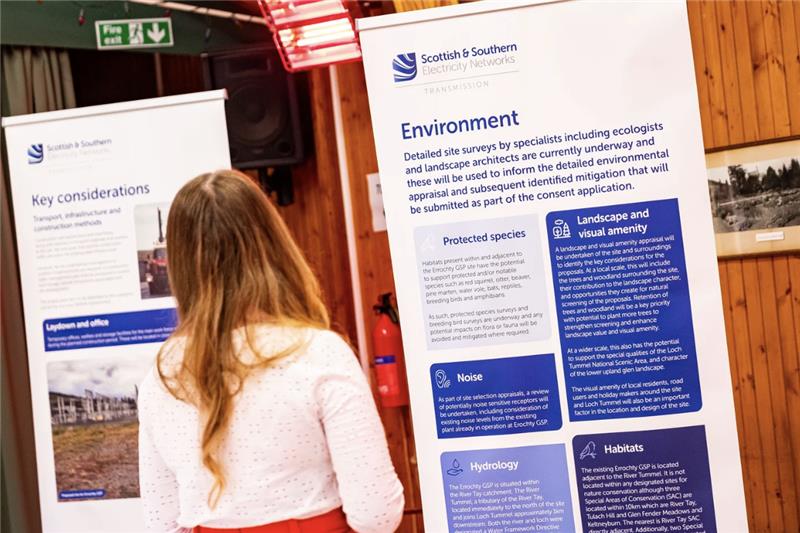
Report on Consultation
Over the course of this year, we have undertaken extensive consultation on plans to upgrade the electricity transmission network across the north of Scotland and have received a considerable amount of feedback from a wide range of stakeholders regarding our proposals.
We recently advised in our next steps for 2030 network developments update that following assessment of consultation feedback and additional options analysis, we would publish our Report on Consultations (RoCs). These reports provide a summary of the feedback received and how it has been considered, which options we will take forward to the next stage of the development process and any changes to options initially consulted on.
It is our intention to publish the RoCs during the week commencing 27 November. All stakeholders signed up for updates on the project will receive a link to the report and we will also issue Summary Reports to help ensure accessibility.
These Report on Consultations mark the completion of the first round of non-statutory consultation, where we sought feedback on the corridor, route, and substation locations. We will be consulting further with local communities and stakeholders in the new year, as we look to refine the projects, therefore we welcome an open channel of communication and would like to reassure all stakeholders that there will be further opportunities to engage on this project.
Our Reports on Consultation and Summary Reports on Consultation are now available to download from the Project Documentation tab. -
SSEN Transmission sets out next steps for Pathway to 2030 network developments
We have announced our next steps for our Pathway to 2030 programme of projects. We would like to thank everyone who has engaged with our teams and kindly taken the time to respond to our consultations.
Full details of the announcement can be found here:
Next steps for Pathway to 2030